Showing posts with label JK Rowling. Show all posts

Sunday, July 15, 2018

Book Log: April 2018

My youngest sister has been doing an annual post of books completed, and I always enjoy looking through it. I do keep a log of my finished books, so I thought cataloging my completed books at the close of every month would be a good way to dust off this blog and encourage me to jot down a few lines -- or a few paragraphs -- with my impressions (a compiled list will appear at the close of the year). I don't like spoilers, so while I put some initial thoughts after each title, when possible I'm purposely vague regarding plot specifics so as not to dissuade any of you from reading them. This is my third year doing this (here is a list of my 2017 books, and here is the list of my 2016 books; these pages don't have commentary, but if there's a title that interests you, click on the appropriate month to learn more).

The included Amazon links are affiliate links; should you be inclined to purchase one, these links only mean Amazon will give me a small percentage of the cost, at no additional expense to you.

25) 4/1: Inspired: Slaying Giants, Walking on Water, and Loving the Bible Again by Rachel Held Evans
I've shared before how pivotal Rachel Held Evans' book A Year of Biblical Womanhood was for me (I took a tangent when discussing the book The Little Way of Ruthie Leming, seen here). Because I pre-ordered her newest book Inspired, I had the opportunity to also be sent an Advanced Readers Copy of it so I could read it a couple months before it was released. In it, Evans comes back to the Scripture with new eyes, reminding herself why she was drawn to it in the first place, and she falls in love with it again.

In some ways, the format reminds me of How to Read the Bible for All Its Worth; both recognize the Bible is written in various styles, and just as you wouldn't approach a book of poetry the same way you'd approach a history text, so you shouldn't read the Psalms the same you'd read the prophets and so on, but Inspired has a less clinical feel.

Rachel Held Evans has a small vignette before each chapter to bring light to the upcoming section. Perhaps it's a short story, a play, a poem, even a choose-your-own adventure piece.

Some chapters, like her section "Resistance Stories," feel especially relevant and timely. In the "War Stories" chapter, Rachel Held Evans reminds us it is good to wrestle with passages we can't make sense of, like widespread slaughter of people groups in the Old Testament:
"Brene Brown warns us we can't selectively numb our emotions, and no doubt this applies to the emotions we have about our faith. If the slaughter of Canaanite children elicits only a shrug, then why not the slaughter of Pequots? Of Syrians? Of Jews? If we train ourselves not to ask hard questions about the Bible, and to emotionally distance ourselves from any potential conflicts or doubts, then where will we find the courage to challenge interpretations that justify injustice? How will we know when we've got it wrong?" (pages 68-69)
I appreciated this book, following RHE's journey and watching her create and learn, finding herself retreating back into the Bible and being reminded of what she loves about it.

26) 4/2:  Bread and Wine: A Love Letter to Life Around the Table with Recipes by Shauna Niequist
This was my first title that I've read of Niequist, although I have several friends that enjoy her. This book is a testimony of the power of food and of gathering around a table.

Each chapter offers a recipe (I listened to the audiobook, read by Shauna, and in those cases, there is a link to download the recipes instead of having to copy them down). Some recipes are more complex than others, and I enjoyed how she shared the role each of the meals played in her life. Moments of joy and grief are naturally covered. After all, I think of when my brother and first child died, how we were gifted meals upon meals, a welcome relief when we could barely form thoughts together, let alone cook a nourishing meal. And I think of when we welcomed two other daughters home, and in those joyful, sleep-deprived times, we were blessed with meals yet again. Food connects us, and this book discusses how that is a sacred thing.

27) 4/5: The Gulag Archipelago by Aleksandr Solzhenitsyn
This book was a labor of love. The first time I ever went on a plane was to travel to Russia when I was in high school, and I've been drawn to literature from that country ever since. I first picked this up about a decade ago and read the first 200 pages or so, but it was around the time we moved from Minnesota to Indiana, and sometime during that transition, I set it aside. I've been longing to get back to it, so when someone in my book club asked if there was a subset of people who would read it with her, two of us jumped at the chance. Once a date was set to discuss it, I set up a reading plan to ensure I finished.

These 600-plus pages make up only the first of three volumes. This copy is found just often enough at used book sales, but I've never come across the other books in the wild, new or used. My husband was kind enough to locate them online and gifted them to me, so I'm hoping to work through those volumes in the next year or so. A word of warning: one member of the book club switched to an abridged edition when it became clear she couldn't finish in time. However, as the discussion went on, she realized she got the overall picture but missed the specific stories that brought life to it and helped the other two of us appreciate it. So if you're intrigued, pick up the unabridged book(s), not the abridged copy.

Solzhenitsyn has compiled comprehensive information to inform us about how Russians were arrested and imprisoned with no cause in the years 1918-1956. The torture they endured, the interrogations, the monotony of daily life once they arrived in a cell -- much is covered in this volume. Solzhenitsyn wrote this in secret, and I'm in awe of his capacity to remember details, names, circumstances.

His insights are powerful; one section compares and contrasts Germany and Russia after World War II. Germany publicly prosecuted 86,000 war criminals, whereas Russia only put 10 on trial (given their populations, that number should have been closer to 250,000). Solzhenitsyn suggests that, when Russians hesitated to draw all of that evil into the light, wanting to ignore it and let sleeping dogs lie, they were teaching their youth that evil is not punished and, instead, is financially lucrative. Whereas Germany publicly condemned their sins, vowing to learn from them ("Not to put them on trial so much as their crimes", page 177). I mentioned this on a couple different occasions with a friend who grew up in Berlin, and she confirms that, when they discuss history, there is absolutely no sugarcoating Hitler's actions.
"We have to condemn publicly the very idea that some people have the right to repress others. In keeping silent about evil, in burying it so deep within us that no sign of it appears on the surface, we are implanting it, and it will rise up a thousandfold in the future. When we neighter punish nor reproach evildoers, we are not simply protecting their trivial old age, we are thereby ripping the foundations of justice from beneath new generations. It is for this reason, and not because of the "weakness of indoctrinational work," that they are growing up "indifferent." Young people are acquiring the conviction that foul deeds are never punished on earth, that they always bring prosperity.
 It is going to be uncomfortable, horrible, to live in such a country!" pages (177-178)

His book is heavy and hard to read at times because of the subject matter, but he does have a sarcastic style that comes through that could bring a smile to my face in the darkest passages. And I found myself drawn to such beautiful, poignant insights:
"The sixteen-hour days in our cell were short on outward events, but they were so interesting that I, for example, now find a mere sixteen minutes' wait for a trolley bus much more boring. There were no events worthy of attention, and yet by evening I would sigh because once more there had not been enough time, once more the day had flown. The events were trivial, but for the first time in my life I learned to look at them through a magnifying glass." (202)

This is an important read and I'm hoping to start the second volume in the coming weeks. It feels so relevant to read and process and discuss.

28) 4/7: How the Light Gets In (Chief Inspector Gamache series, #9) by Louise Penny
The previous Louise Penny book ends on a heartbreaking note; we saw the inevitable path being laid, but that didn't make it any easier to stomach. In this volume, Gamache wrestles with the new normal of his altered (in)significance at the Surete as he also works on a case for Myrna: the death of her friend. As he delves into her past, he learns she also wrestled with her place in the world and how people viewed her, as she had tried to hide from her childhood of notoriety. Meanwhile, he has several moles in his department and all but one of his previously loyal core team have abandoned him for other departments.

I enjoy all of Louise Penny's novels, but this is tied as a favorite; I've learned I have a special place for the volumes where she has intricately woven several storylines. This one plays out spectacularly. We know Gamache's actions are being analyzed and as several cases converge, the tension heightens as we see what's at stake in the bigger picture.

29) 4/9: In This House of Brede by Rumer Godden
This was a lovely read. The prologue introduces us to Philippa, a powerful, efficient woman in authority. However, she resigns from her post to take orders, and the rest of the novel plays out in the Brede monastery.

I appreciate the portraits we get of the various members -- they are well-rounded instead of being visions of holy, unattainable, perfect nuns. Each is shown with foibles and weaknesses, but we witness them working to love each other through their failings as they struggle to live faithfully in their cloistered home.

There's humor and vulnerability throughout. I loved the truth inherent in the following exchange:
‘Weren’t you surprised that God should have chosen you?’ a young woman reporter, writing a piece on vocations, had asked her. ‘Yes,’ Dame Perpetua had answered, ‘but not nearly as surprised as that He should have chosen some of the others – but then God’s not as fastidious as we are,’ said Dame Perpetua.
I'm still processing the ending, trying to decide how I feel about the events, but overall it was a pleasant, thoughtful read and a loving tribute to a monastery the author had occasion to get to know.

30) 4/10: Harry Potter and the Goblet of Fire by JK Rowling
I continue to make my way through the series on audiobook, enjoying Jim Dale's masterful readings. This is the volume with the Tri-wizard Tournament.

I was still a little behind my daughter's progress, but wait until next month when I jump ahead!


31) 4/14: The Long Way Home (Chief Inspector Gamache series, #10) by Louise Penny
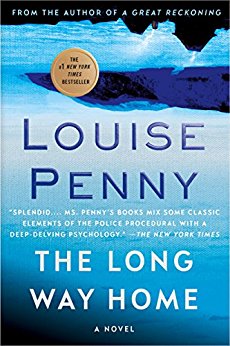
Gamache is taking in a long-needed rest, spending long stretches at home with his wife for the first time in many years after having retired from his post. His friend Clara is worried about her husband's absence and finds the courage to open up to Gamache.

This ended on what felt like a necessary conclusion, even if it's disappointing and devastating in a way.


32) 4/18: The Nature of the Beast (Chief Inspector Gamache series, #11) by Louise Penny
A boy disappears and in investigating his absence, events from the past are dredged up. Long-time residents of Three Pines must wrestle with their inaction and silence as truth comes to light.

One note: I adored Ralph Cosham as a narrator, but he passed away between books ten and eleven. I was a little jolted when I began listening to the gentleman chosen as a replacement, but by the end of the book, while he's different, I could appreciate him as a skilled narrator. It took some adjustment, but in this and later titles, I can admire his skill while also mourning the loss of the artistry that Ralph Cosham brought to the text.


33) 4/20: 84, Charing Cross Road by Helene Hanff
This was a reread for me; I first read the book last summer, courtesy of my sister's copy. This winter I got a hold of the movie, which filled a lovely evening, as much of the dialogue is word for word from the letters. Then I checked out the audiobook when I saw it was available. It's still fresh in my mind (the paperback, movie, and audiobook all happened in about six months), but the audiobook is well done and is performed with multiple readers to cover the various letter writers.

I enjoy epistolary books, but this one is extra delightful given that these are actual letters exchanged. It's a beautiful picture of friendships forming from an initial love of literature. As time goes on, Helene gets involved in their difficulties by sending food parcels to them, and it blossoms from there. It's a short read/listen, well worth encountering.

34) 4/23: A Great Reckoning (Chief Inspector Gamache series, #12) by Louise Penny
Gamache had retired from the Surete, but after some time off, accepted a position at the Surete Academy, training new cadets. There was rot in the Surete, which led to the events of Gamache's departure, and he suspects the academy had individuals that had an agenda to create loyalists instead of cadets who will become officers that seek the greater good.

Gamache fires some faculty and hires others, one of which is a gamble, given his history. Gamache even selects the incoming cadet class, and one particular student he takes under his wing. Amelia Choquet doesn't seem as if she will finish and she's rough around the edges, but Gamache knows her back story and chose her in an attempt to stop the cycle of hopelessness and grief.

When a professor is killed, Gamache finds himself investigating again, and a copy of a map leads him and some students back to Three Pines to investigate.

35) 4/26: A Prayer for Owen Meany by John Irving
When friends share their top reads of all time, this book comes up just often enough as a favorite book. I bought a Kindle copy on sale several months ago, but as my reading time fluctuates, I also ended up buying it on Audible when it was discounted. I steadily listened to it, and for much of the book, I was entertained but was waiting for the moment I'd understand why people loved it so.

It's not a short read/listen; the audiobook clicks in at nearly 27 hours (although about 30 minutes of that is a conversation with the author). There's a lot of buildup, but the final hour or two are riveting. Irving admitted in the concluding interview that he started with a premise of what would it take for an atheist to believe in a higher power, and he wrote that story. The Vietnam War feels like a character, although we are hearing about it years in the future. It's a tribute to friendship and to family.

Small sidenote: when I was younger, I saw the movie Simon Birch, which is loosely based on this book (I can recall the circumstances of watching it -- at the annual cabin campout through our 4H club -- but the movie was forgettable). I decided to watch it again after concluding the book, but I was highly disappointed in the alterations they made, even as I understood why. The book's closing is so powerful that it's hard to settle for the diluted retelling.

36) 4/30: Glass Houses (Chief Inspector Gamache series, #13) by Louise Penny
This title, although the 13th in the series, still manages to engage readers by new methods. The structure of this one begins with a trial, where Gamache is testifying. We try to piece together details, and some chapters go back in time so we can live out the events Gamache is referring to.

A mysterious masked and hooded figure appears in Three Pines, standing ominously in the square, refusing to speak or leave. When the figure is later found murdered, the investigation is muddled and we switch between the trial and the events leading up to the discovery of the body and the time afterwards to see what could have been changed.

Louise Penny is not afraid to try new formats for her Gamache books, which is one reason I keep coming back. I heard an interview with her where she admitted that she doesn't want to get bored writing formulaic mysteries, so she keeps playing around until she finds something that captures her interest. This isn't a favorite of mine, but it was still an enjoyable listen

Wednesday, May 09, 2018

Book Review: Harry Potter and the Order of the Phoenix

I've really been enjoying revisiting the Harry Potter series through the audiobooks. The previous four titles were pleasant, but it was truly in this book, Harry Potter and the Order of the Phoenix (JK Rowling), that I began to anticipate all that was to come and have my heartstrings start to tug as I remembered what was about to transpire.

I've suggested in conversations that Neville is one of my favorite characters, and it is in this book that he secured that honor. The visit he takes to St Mungo's reveals a part of his character that switches him from his previous status of convenient source of amusement at his expense to a maturing student who feels deeply.

My husband did the lions-share of reading the books aloud to our oldest daughter, but periodically I stepped in when he was busy. I happened to be able to read aloud the chapter at St Mungo's, and I admit I couldn't do it without my throat tightening and some tears trying to emerge. I spoke at length with my daughter why this has such an emotional reaction for me, as his complicated relationship with his parents resonates with me as I see it through my lens of my interactions with my own mother who struggles with mental illness. Neville's graciousness and genuine love for his mother chokes me up every time.

Many complain about how whiny Harry Potter is in this book, and while that's true, I will always have a fondness for it because this is where we see Neville as a more rounded, sympathetic character.

(I've used Amazon Affiliate links here; should you purchase through these links, I receive a small commission, at no extra cost to you.) 

Tuesday, March 06, 2018

Book Log: February 2018

My youngest sister has been doing an annual post of books completed, and I always enjoy looking through it. I do keep a log of my finished books, so I thought cataloging my completed books at the close of every month would be a good way to dust off this blog and encourage me to jot down a few lines -- or a few paragraphs -- with my impressions (a compiled list will appear at the close of the year). I don't like spoilers, so while I put some initial thoughts after each title, when possible I'm purposely vague regarding plot specifics so as not to dissuade any of you from reading them. This is my third year doing this (here is a list of my 2017 books, and here is the list of my 2016 books; these pages don't have commentary, but if there's a title that interests you, click on the appropriate month to learn more).

The included Amazon links are affiliate links; should you be inclined to purchase one, these links only mean Amazon will give me a small percentage of the cost, at no additional expense to you.

10) 2/6: A Rule Against Murder (Chief Inspector Gamache series, #4) by Louise Penny
You better just get used to me mentioning these mysteries on a regular basis as I work through them this year. The mysteries are such a treat to read, filled with descriptions of enticing food and led by a detective that reminds me peripherally of Hercule Poirot but more human and less self-absorbed as he assembles a team that individually aren't seen as spectacular but they tend to submit to his mentorship and they work together impressively.

In this fourth book in the series, we find Gamache and his wife celebrating their anniversary, as they do every year, at a secluded, posh resort. They happen to be present while the lodgings are taken over for a family reunion. Gamache notices how dysfunctional all the family members seem to be. We shouldn't be surprised that someone Gamache knows from nearby Three Pines is related to this family and shows up shortly before a murder happens.

As Gamache investigates, it comes to light that many of the family members perceived events growing up in a false light, reading things into them that weren't there. It's a bittersweet story, with some hints of redemption but not all comes to rights.

11) 2/10: Harry Potter and the Prisoner of Azkaban by J.K. Rowling
I'm continuing to revisit this series, steadily working through the delightful Jim Dale audiobooks. They continue to be excellent (and I'm still behind my daughter and my husband, so I'm in this perpetual state of forgetting which event happens in which book because I will overhear a chapter being read aloud or will take over reading duties once or twice a week and it can get all jumbled in my mind).


12) 2/13: The Brutal Telling (Chief Inspector Gamache series, #5) by Louise Penny
Here we go again -- another Louise Penny mystery! In this one, a hermit is found murdered in Three Pines, seemingly unknown by everyone.

This story doesn't wrap up as cleanly as other books in the series -- there's evidence that appears to pinpoint a character as the murderer, but it's not as definitive as previous books, as if they're saving room for a return to the story.


13) 2/19: I Am Malala: The Girl Who Stood Up for Education and Was Shot by the Taliban by Malala Yousafzai
This has been on my radar for awhile, and while I've been steadily plugging along on it, reading chapters in stolen moments, I made quicker progress when I switched to listening to the book.

I thought I knew the general storyline: Malala gets shot by the Taliban because of her desire to continue to be educated, even as they are discouraging girls from attending schools. I thought this book would start with that event and continue with her healing and activism afterwards. However, I was surprised and suitably impressed by how outspoken and involved Malala was at a young age. This book sets out how life changed for her family as the Taliban gained power, and how her family was resisting and Malala was getting the word out on her daily experiences. She was targeted because of these actions, but the shooting event happens towards the end of the book.

14) 2/20: The Scarlet Pimpernel by Baroness Orczy
When I was in junior high, my English teacher, the quirky Mr Pierce, introduced this book to our class. He read most of it aloud to us as we followed along, pausing to define new vocabulary or confirming we were following the plot. Then he set us lose to read the last third or so on our own. I DEVOURED it -- it's such a fun read. It's a classic but it doesn't read like some other books in the canon that, while interesting, discourage some people because of the length and the frequent, detailed asides.

In The Scarlet Pimpernel, we find ourselves in France and England during the Reign of Terror. We learn there is a master of disguise who is smuggling royalty destined to guillotine out of the country. There's a parallel love story alongside the Pimpernel action, where Lady Marguerite is reflecting on how she has lost the love and respect of her new husband, the simpering but previously devoted man.

I picked up an audiobook copy from Audible when it was recently on sale, and it was a delightful listen. In fact, the narrator was Ralph Cosham, the same narrator of the Chief Inspector Gamache books I've been working through. It became further amusing to notice there is a character named Armand in both this title and the Louise Penny series.

15) 2/20: Love Big, Be Well: Letters to a Small-Town Church by Winn Collier
This is a newly released book, not all that long but packed full of thoughtful reflections. The structure is a series of letters, primarily from a pastor to his church. The way he was hired was a deviation from traditional practices, primarily because the search committee was getting disillusioned with the process.

I found myself enjoying the structure. First, the letters aren't all that long, and while they do refer to earlier letters, they can be stand-alones, making it easy to read a letter or two at a time, then set it down. I wanted to copy down so much of the insights (but, for now, I snapped photos of multiple pages so I could return the book and come back later to copy down my favorite passages). It's a beautiful book.

16) 2/23: Seize the Day by Saul Bellow
Here was the February book club selection; we'd originally earmarked a longer work of his, but it was quickly replaced with this novella until the book club got a taste for Saul Bellow's writing style to see if we wanted to tackle one of his longer classic works.

The protagonist is a gentleman entering middle age but still floundering in the world. He spent several years attempting (and failing) to become famous in Hollywood, and now he's nursing his wounds after leaving his wife and children and struggling to find meaning. He finds it easy to lay blame on others, but in more vulnerable, introspective moments, he recognizes ways in which he habitually chooses the wrong course. He is desperate to gain approval from his father, longing for the slightest signs of love and caring. The discussion was delightful and already makes me want to revisit the book after the insights shared.

Sunday, September 24, 2017

Book Log: August 2017

My youngest sister has been doing an annual post of books completed, and I always enjoy looking through it. I do keep a log of my finished books, so I thought cataloging my completed books at the close of every month would be a good way to dust off this blog and encourage me to jot down a few lines -- or a few paragraphs -- with my impressions (a compiled list will appear at the close of the year). I don't like spoilers, so while I put some initial thoughts after each title, when possible I'm purposely vague regarding plot specifics so as not to dissuade any of you from reading them. This is my second year doing this; here is a page containing the 2016 posts (or here is a list of all 2016 books, without the commentary on each one).

The included Amazon links are affiliate links; many of these titles I check out from the library or already own, but should you be inclined to purchase one, these links only mean Amazon will give me a small percentage of the cost, at no additional expense to you.

42) 8/5: Jesus Cow by Michael Perry
This was our book club selection for the month, as a light-hearted palate cleanser after A Canticle for Leibowitz. I listened to the audiobook (while painting trim, surprise surprise) and I couldn't help but think about how it reminded me of Garrison Keillor's Lake Woebegone stories.

Michael Perry gives us insight into small town life through the various characters we follow. At the beginning, Harley discovers a calf born on Christmas Eve with one spot resembling the face of Jesus. The calf certainly leads the action, but we get entertaining asides as we learn the stories of the other personalities in the town. An easy, simple read.


43) 8/7: A Gentleman in Moscow by Amor Towles
I joined our neighborhood book club in the summer of 2016, and if I've learned anything, it's that I leave every meeting with several more recommendations to add to my reading list. I'd read praise for this book and had checked it out in late spring on a whim, but I didn't get past the introduction before it was due, and it was a popular enough title that renewals weren't an option. When a member of the book club raved about it, I promised myself I'd be more diligent about reading it at another time and I was able to pick it up during an evening hermit date at a library.

It's truly a beautiful book. In the preface, we learn the protagonist is being sentenced to live the rest of his life within the walls of the hotel. His opulent room is taken from him and he ends up in a cramped space with a minimum of possessions, but as the hotel is spacious with every convenience (barber, seamstress, restaurants, bars, florist, and so on), he isn't constricted. He learns to see beyond his normal routine to explore, with the guidance of a young friend, every inch of his surroundings.

Decades pass and I found myself enjoying the relationships the Count developed and nurtured. Several hotel employees become like family, and I found myself treasuring this book.

44) 8/10: Ethan Frome by Edith Wharton
This was an impulsive audiobook listen (while I painted the last of the doorways/trim, thus concluding my summer painting projects).

I've read a couple of Edith Wharton's books before this one, and there's a familiar melancholy through them all. With this being more of a novella, it can give you a quick taste of her style if you're unfamiliar with her and want to experience her work. In order to give nothing away, I'll just state that Ethan Frome is a hard-working, struggling farmer who starts to find joy and hope and wrestles with what to do next.


45) 8/15: Harry Potter and the Chamber of Secrets by J.K. Rowling
Another pleasant listen as Jim Dale narrated.  I hope to find times to listen to the rest of the series (although maybe my impatience for library waitlists will have me pulling my copies down from the my bookshelves).


46) 8/20: 84, Charing Cross Road by Helene Hanff
I kept encountering this title in an online book group I found myself in but I hadn't yet gotten my hands on a copy. It's an epistolary book (a favorite style of mine), and to sweeten the deal, it's non-fiction. It just so happened that when my three sisters came for a visit, my youngest sister had a copy and knew it was just the sort of book I'd adore (she was right).

Helene, a New Yorker, writes a London bookshop, requesting help acquiring some titles. Over the years, friendships form and we get to watch it all play out. Helene can be brash, amusing, pushy, and kind in her letters. Her generosity to this bookshop is touching. This is a book I hope to add to my library. It's not all that long (I read it in one day), but it's such a pleasant read.

47) 8/21: Maus: A Survivor's Tale (I: My Father Bleeds History) by Art Spiegelman
Maus is a graphic novel that also falls into other categories, including biography and memoir. The author interviewed his dad about living as a Jew in Nazi-occupied Europe. Art recorded the interviews and then added the artwork. The storyline shifts - we see Art in present day interacting with his father (perhaps enduring interactions with his father is more accurate), asking questions about his father's life. Then we get transported to the past as his father tells his story.

This is the first volume of two, and I plan on reading it, as well. Art Spiegelman's created a compelling work. Even his portrayal of Jews as mice, Nazis as cats, Poles as pigs, etc., adds an interesting dynamic.


48) 8/22: Interpreter of Maladies by Jhumpa Lahiri
I have read some other books by Jhumpa Lahiri and appreciate her style of writing and her portrayal of immigrants trying to adjust to life in America. This was one of her short story collections I hadn't yet read and was also the one she won the Pulitzer Prize for. I yet again appreciated her ability to make the characters so relatable - I can have strong emotions come up as I read her stories as she makes the regret, anxiety, disappointment, and so on so palpable.


49) 8/27: The Angel Knew Papa and the Dog by Douglas Kaine McKelvey
This book is relatively short, a pleasant children's fiction chapter book. While I read this book, perhaps it's not fair for me to count it. Sometimes I struggle with falling and/or staying asleep at night, and in those situations, I'll grab my Kindle to read until I'm tired again. This was a book I read during a couple of those middle-of-the-night stretches. All that to say, my memory is foggy in points.

Here's what I do know: it's beautifully written, and the ending seemed abrupt to me after the lovely pace of the rest of the book.

Wednesday, August 09, 2017

Book Log: July 2017

My youngest sister has been doing an annual post of books completed, and I always enjoy looking through it. I do keep a log of my finished books, so I thought cataloging my completed books at the close of every month would be a good way to dust off this blog and encourage me to jot down a few lines -- or a few paragraphs -- with my impressions (a compiled list will appear at the close of the year). I don't like spoilers, so while I put some initial thoughts after each title, when possible I'm purposely vague regarding plot specifics so as not to dissuade any of you from reading them. This is my second year doing this; here is a page containing the 2016 posts (or here is a list of all 2016 books, without the commentary on each one).

The included Amazon links are affiliate links; many of these titles I check out from the library or already own, but should you be inclined to purchase one, these links only mean Amazon will give me a small percentage of the cost, at no additional expense to you.

35) 7/2: Hand to Mouth: Living in Bootstrap America by Linda Tirado
Here's another audiobook listen (accomplished while finally reclaiming my craft room, which has been in a sorry state for way too long and is now a welcome oasis when I can retreat there, if even only to read than to create).

It was a friend's recommendation after I shared a Kindle sale for Hillbilly Elegy (covered in my February book log).

Like JD Vance's book, it articulates what life is like for someone barely getting by. There have been just enough conversations lately with friends about the importance of listening to stories like this. With frequent debate about what healthcare in our country should look like, for instance, it appears the people making the decisions haven't considered how it legitimately impacts individuals at every level because their experience hasn't been a typical one (issues like not every employer offers healthcare, or birth control is prescribed for more than just preventing pregnancy, and so on).

Tirado goes through her life experience, both sharing what led her to her current situation and how hopeless and dehumanizing it can be (for instance, she has great shame -- and pain -- about her teeth, but she doesn't have the financial means to address the situation because when money comes up, it's earmarked elsewhere).

36) 7/8: You Don't Have to Say You Love Me by Sherman Alexie
Green Bay held UntitledTown, an inaugural book and author event, this past spring. It fell during a busy weekend, so while many events intrigued me, I was only able to attend the capstone talks, given by Sherman Alexie and Margaret Atwood.

I was familiar with Atwood and read The Handmaid's Tale before her talk (see my April log). I'm embarrassed that I was previously unfamiliar with Sherman Alexie (although a couple of his book titles were known to me). He opened the evening, and I was blown away. He is a talented speaker, weaving a series of stories that seemed entertaining and flippant at the start, only to reveal at the end that he's been intentionally working to a emotionally moving close.

This memoir was his focus, as it was released this summer. It covers his complicated relationship with his mother and the emotional processing of her death. So much of it resonated with me. My mother struggles with depression and schizophrenia, so while our experiences haven't been identical, I could easily relate with the complexity surrounding a nontraditional parent-child relationship. It was a powerful, beautiful read. Alexie writes essays as well as poetry, and it's a perfect blend. I highlighted repeatedly, and if I dwell too long on the passages I marked, it makes me want to weep for the truth of the words.

37) 7/8: A Canticle for Leibowitz by Walter M. Miller, Jr.
This was the July book club selection, my recommendation, as it had been suggested by my husband several (many?) years ago as an interesting read.

It is a thought-provoking post-apocalyptic piece written in three parts, with 600 years passing between each section (the section titles, in Latin, translate to "Let there be man," "Let there be light," and "Let thy will be done").

The book asks you to consider the role of faith, science, and technology in our world. It was written in 1960, and our book club mentioned how forward-thinking Miller was in imagining the future as well as how relevant the book was today, as if it had just been published. Even with each section being unique in its scope, the book reveals how cyclical the world is when it comes to how people behave in power, and there's much to consider with morality and how church and government act in the world.

38) 7/21: From the Mixed-Up Files of Mrs. Basil E. Frankweiler by E.L. Konigsburg
I'd picked up this book from a recent school book order for my older daughter (she's an accomplished enough reader that the 1st grade offerings were typically beneath her, and I learned I wasn't limited by grade, so I began eyeing the chapter books meant for older elementary students).

She hasn't jumped into it yet, but I saw the audiobook at the library and picked it up. While painting around the house (an outside door and the landing trim/bathroom cabinet, to be exact), it was pleasantly completed.

It's a delightful listen. Two siblings run away, and given that comfort is a factor, the older sister decides to live in the Metropolitan Museum of Art. The mystery surrounding a recent museum acquisition focuses the children into learning as much as they can about the authenticity of the statue in question. The story is told from the point of view of Mrs. Basil E. Frankweiler, the reasoning of which is made clear towards the end. Since I'm so critical of audiobook readers, even though I often listen, I should articulate that this one was perfectly done.

39) 7/27: Born a Crime by Trevor Noah
I had acquired this audiobook free when Audible gave it away in January. I held off listening to it, even though it was getting rave reviews, because it had come up as a possible book club selection. It hasn't been mentioned lately and I didn't want to miss out any longer, so the majority of it was enjoyed while I painted the girls' playroom (yes, the theme this summer is "listen to podcasts or audiobooks while tackling painting projects").

First, Trevor Noah does an exceptional job reading it, and it easily seems one where you should try, if at all possible, to listen to it instead of reading it; even setting aside his accent, hearing him jump into other languages adds a great dynamic, and he modulates his voice to diversify the various individuals.

Trevor discusses at length his experience growing up in South Africa under apartheid and how things altered when apartheid ended. He has a white father and a black mother, which played a large role in how he was treated under apartheid as well as how his experiences in school played out (he shares how people differentiated among white, black, colored, mixed, Indian). He is well read and seamlessly shares historical details. I found myself often grinning as he shared about his relationship with his mother.  She holds her own with him, and there's no doubt where his strength and resilience came from.

I highly recommend this one; Trevor Noah tells a fine story, and while sometimes gushing recommendations from others can lead me to have overly high expectations and be disappointed, that was fortunately not the case here.

40) 7/29: The Warmth of Other Suns: The Epic Story of America's Great Migration by Isabel Wilkerson
This was a well-done read that I started in January and have been plugging at pretty steadily ever since. It's a dense book at 545 pages, but it's an eye-opening read.

In it, Wilkerson takes three individuals who left the South in different decades to frame her research about the migration of blacks out of the South, an event that began around 1915 and is understood to have ended around 1970. I read it on my Kindle and have what amounts to pages and pages highlighted.

My earlier descriptive of "dense" might turn people off, but it's one of those non-fiction books that's very accessible and I would get invested with the various characters, rooting them on and hoping they found success. I highly recommend this one.

41) 7/30: Harry Potter and the Sorcerer's Stone by J.K. Rowling
I have read the Harry Potter series previously (perhaps only once before...), but I've been wanting to revisit them. Even though we own all the books, I'd heard high praise for the Jim Dale audiobooks, so I've taken to knitting in my craftroom or tidying up there while listening. It's been a pleasant routine.

Right as I began this book, though, my husband began reading the series to my 6-year-old daughter, and I found myself cringing when they'd get ahead of me and I would even try to leave the room if I could (I know the general arc, but since it's been awhile since I read them, I want to be revisit the little details in chronological order). We plan on halting the read-aloud after the third book until she gets older, so then I can devour the final books, spoiler-free!

Thursday, February 02, 2017

Book Log: January 2017

My youngest sister has been doing an annual post of books completed, and I always enjoy looking through it. I do keep a log of my finished books, so I thought cataloging my completed books at the close of every month would be a good way to dust off this blog and encourage me to jot down a few lines -- or a few paragraphs -- with my impressions (a compiled list will appear at the close of the year). I don't like spoilers, so while I put some initial thoughts after each title, when possible I'm purposely vague regarding plot specifics so as not to dissuade any of you from reading them. This is my second year doing this; here is a page containing the 2016 posts (or here is a list of all 2016 books, without the commentary on each one).

The included Amazon links are affiliate links; many of these titles I check out from the library or already own, but should you be inclined to purchase one, these links only mean Amazon will give me a small percentage of the cost, at no additional expense to you.

1) 1/5: Chicken with Plums by Maryjane Satrapi
A friend from my neighborhood book club sent me home with this book after our last meeting. It's a graphic novel (my first?), so it's a relatively quick read. The author is Iranian, and the story follows a skilled tar player.

There are flashbacks (and scenes that take place in the future) as the protagonist is waiting to die. We gradually learn why he feels depressed and why he has lost his ability to play as well as how suffering can actually be channeled into the creation of great masterpieces. The ending is very bittersweet.


2) 1/5: Same Kind of Different as Me: A modern-day slave, an international art dealer, and the unlikely woman who bound them together by Ron Hall and Denver Moore with Lynn Vincent
I don't recall where I first heard of this book. It was late in 2016, and a library copy was available, so I picked it up. Now I see repeated mentions of it and key positioning in the bookstore, likely due to the fact that a movie of it is coming out this year.

It's a non-fiction work, and the narrative switches between Ron and Denver. They both started life in lower-class situations; Ron, who is white, became quite wealthy and he and his wife started volunteering at a homeless shelter. Denver, a black man who grew up sharecropping, ended up homeless, and their paths cross at the shelter.

Ron's wife is the one who brought them together initially and encouraged their friendship. A true friendship does develop between the two men. There are some moving insights and it raises some interesting questions and reflections on faith, but I don't think this is one that will stick with me.

3) 1/7: Harry Potter and the Cursed Child by J.K. Rowling
I read this script very quickly. Having read the original seven-volume series (by the last 2-3 books, I was waiting for them in bookstores at midnight), I wasn't sure what to make of this play when I learned of its publication, but after talking with my youngest sister after she had read it, I added it to my list.

I wasn't surprised at who the "cursed child" was, but it reminded me how much enjoyment I derived from the Harry Potter stories. The Tri-Wizard Tournament is revisited because of the plot circumstances, further making me want to reread the books. I didn't anticipate how excited I would get in the story-line (I may have dreamed of using a time-turner in my own life while reading this). If you enjoyed the series and don't mind reading a script, I think you'd enjoy this.

4) 1/11: This Is the Story of a Happy Marriage by Ann Patchett
I have decided I really enjoy reading Ann Patchett; her writing style is one I find very natural and easy to read. You may recall I read her book Commonwealth a couple months ago (see my reflections on it within this post), which had me searching out other works of hers.

This book is a representative collection of essays over her decades of writing. They range on a large number of topics (detailing her writing process, describing early book tours, ending her first marriage, marrying again, applying for the police academy, opening a bookstore, encountering protests when her memoir on friendship is chosen as a college freshmen-wide read, and on and on). They offer a comprehensive picture of her non-fiction work.


5) 1/13: My Father's Dragon by Ruth Stiles Gannett
The genres of books I read might give others whiplash - going from screenplays to essays to literature to young adult and middle readers. It's not for the faint of heart, but it's how I find rhythm in my days - when my time is constrained and mental ability is at a minimum, I am drawn to simpler works, and as my mind wants to be challenged, I delve into a meatier piece.

This book was a simple read, not as much because I felt overwhelmed but more so because some friends with first graders recommended it for our young ones. It is a simple read of a boy describing an adventure his father went on to rescue a dragon.

The author illustrated the book; I read it on my Kindle Paperwhite, but I suspect they're more engaging in a physical book. My rule of thumb is to default to reading on my Kindle unless it's a cookbook, craft book, or children's book. As I was just investigating this title for its potential, though, I jumped on the electronic library copy.

It's a pleasant read, and as I learned it's the first in a trilogy, expect to see me make quick work of them (the books can be bought individually or in a volume together). My reading daughter is obsessed with the Boxcar Children, but if I can wrench her away, perhaps I'll show her this title. I think she'll enjoy Elmer's industriousness in outsmarting the dangerous animals he encounters, and I suspect her toddler sister will enjoy the story as well, especially with the frequent illustrations.

6) 1/13: Betsy-Tacy by Maud Hart Lovelace
I'm embarrassed to admit how long it took me to read this volume. I bought it late in 2012 at my youngest sister's recommendation. The first couple chapters charmed me, but I set it aside unfinished with visions of reading it aloud to Brennan; as she was only two at the time, I knew I needed to wait. As she got to the point where we began reading chapter books to her, I did begin this one. She enjoyed it, but then she was introduced to the Little House books, and those took precedence.

As she is caught up in all-things Boxcar Children, I decided I would just read this title without her. It's a pleasant, somewhat meandering read about friendship between two girls and all the imaginative play they enjoy. There are some author illustrations throughout.

This book was originally published in 1940. The internet tells me this book began as semi-autobiographical bedtime stories told to the author's daughter that were based on the author's childhood and, later, her journals (thanks, Wikipedia!). There are quite a few of these semi-autobiographical books in the series, so expect more mentions of them throughout the year.

Knowing this book is based on childhood reflections helps me make more sense of it. The sorts of details you have of a childhood memory are in contrast to how you could write about an imaginary adventure two young girls have. But the ways these two girls process the death of a young sibling, for instance, gives a greater insight to how these little girls processed loss.

7) 1/14: Elmer and the Dragon by Ruth Stiles Gannett
After finishing My Father's Dragon, I continued on to the second volume. The first book described the dragon's rescue, and now Elmer needs to return home. The grateful baby dragon offers to fly him home; a storm forces them ashore an island, where some shenanigans take place, but Elmer is able to make it home in time for his father's birthday.

It's hard to reflect on this one without mention of My Father's Dragon - there is a distinct story within these pages, but it picks up immediately where the first book ends, so that I find them a natural pairing (who wants to read about the end of a journey without also reading what brought them there in the first place?).


8) 1/23: Staggerford by Jon Hassler
This was the January book club read; it was actually my recommendation. I first encountered this book during my first year teaching; Hassler is Minnesotan and the Minnesota high school I taught at used this novel in the College Prep Writing class.

This book covers one week in the life of Miles Pruitt. Take a middle-aged English teacher feeling in a bit of a rut, add in the elderly friend Agatha McGee whose house he lives in, as well as interactions with students, colleagues and administrators, and some walks down memory lane, and it all makes for an engaging read.

When I taught, even before students approached this book, we assigned a "What I Wish" paper assignment, to mimic the assignment given to the students in the book. There were few parameters, as it was a low pressure way for students to share something they wish for, however flippant or serious, and for us to learn about their interests and writing skill in the process.

Two "What I Wish" essays that were submitted still stand out for me after more than a decade removed from teaching.

One was a bittersweet reflection done by a boy whose grandmother lived in their house for a couple years before she died. It was a touching tribute to inter-generational living, as well as a heartfelt reflection to processing her death in their house and all he lost with her passing.

The second essay, the one that I recall most vividly, was by a student who wrote achingly about the current estrangement from her beloved older sister; the sister had become pregnant and moved in with her boyfriend, writing off her family in the process. Her essay was raw in its pain, and in my first semester of teaching, I didn't know exactly how to provide comfort.

After assigning a grade, I wrote a postscript, something to the effect of how I couldn't fully understand her own situation, but I could empathize; how I also had a sister become suddenly pregnant after high school, and although it created a temporary rift, having a child was the best thing for her - the transformation was astounding, relationships were repaired, and I wished my experience might offer her some measure of hope for future restoration in her own family.

I handed the papers back and never heard a word from that student about my personal comment. Fast-forward to parent-teacher conferences, though, and while sitting down with her parents, the mother reached out her hand to grab mine. Her daughter had shared the postscript with her mother, and when she did so, they dissolved in hopeful tears that their situation would, too, work out in time. We teared up again at conferences as we relived similar pains, and I was forever grateful I didn't ignore the urge to write that personal note.

So now you know my personal feelings surrounding this book as I encountered it with my students. I've been wanting to revisit this book, but I worried my nostalgia surrounding this book made me view it in a different lens, perhaps making it better than it really is. I need not have worried. Everyone in my book group spoke of how well they enjoyed it and how well Hassler wrote, and while I remembered the bare skeleton of the book, enough specifics had faded, making me relish it again.

Throughout the book, Miles is working through his own students' "What I Wish" essays, facing his own tension as he reads through weighty stories:
No wonder the briefcase was so heavy, thought Miles. He should have known better than to collect all 114 papers at one time. The wrongs and losses and near misses of 114 people, when packed together in one briefcase, took on the heaviness and solidity of rock. So it wasn't the poor penmanship after all that made reading these papers so difficult. Nor was it the futility of trying to teach English grammar. It was the way these papers teased him off the road of hope into the gulch of despair.
This reflection has gone on long enough, but the book held up to another reading, and it has made me want to dig out another one of his books that I picked up at a library sale so that I might visit it sooner rather than later.

9) 1/26: The Dragons of Blueland by Ruth Stiles Gannett
This was the conclusion to the My Father's Dragon trilogy; they're short reads, so it was natural to fit them in close together.

In this book, the dragon, on his way to being reunited with family, learns they are about to be captured. He asks Elmer for help, knowing he can't coordinate a rescue on his own. A sweet conclusion to the trilogy.