Quid Pro Quo by Vicki Grant is an amusing middle grade book with a great first line: "I started going to law school when I was ten years old." Cyril, now 14, is being raised by his young single mother who found bringing him to evening classes with her was easier (and cheaper) than lining up childcare. Through attending classes and quizzing his mother Andy for exams, he absorbs no small amount of law information.
When a stranger arrives at their home and begins living with them and has mysterious conversations with Andy out of hearing, Cyril realizes there are details of his mother's past that are unknown to him. When his mother disappears, he begins to investigate on his own to get to the bottom of what happened (he isn't interested in foster care, so he doesn't want to report her disappearance to the police).
There is adventure and intrigue (and some suspension of disbelief would be appropriate), but never did I doubt circumstances would be resolved positively. It's not a literary masterpiece, but it is a fun, amusing read. I suspect this book will appeal widely, and it would be just the book to grab the interest of a struggling reader; he or she can cheer on Cyril as he faces dangerous situations and manages to get to the bottom of the mystery.
(I was given a digital ARC from NetGalley and Orca Book Publishers in exchange for my honest opinion. I've used Amazon Affiliate links here; should you purchase through these links, I receive a small commission, at no extra cost to you.)
Friday, August 31, 2018
Sunday, August 26, 2018
Book Review: Toaff's Way
Toaff's Way by Cynthia Voigt is a children's chapter book told from the point of view of a young squirrel. Toaff begins the story living inside a dead tree before it is knocked over in a storm. Toaff must then navigate the world on his own, choosing where to shelter and how to stockpile food for the inevitable winter. His situation and the cast of characters around him are always shifting.
The names chosen for the characters are worth a mention in this book. All the squirrels have names that end in 'f' -- Toaff, Criff, Nilf, Soaff, Mroof, Tzaaf, Pneef, and so on, and admittedly this made distinguishing among side characters more difficult than it needed to be. The cats are named Snake and Fox, which also seems to be asking for confusion.
The descriptions for houses, barns, even roads ran the gamut of either effectively showing how Toaff ordered his world or seeming forced and stilted. In fact, I still couldn't figure out who one of the predators towards the end was meant to be, even after the descriptions.
However, even with those criticisms, there were descriptions in the book I appreciated. As an example of how Toaff compartmentalizes his world, he shares, "Predator was a word with long dark wings and sharp talons, while prey was a quick little word, helpless as a mouse." And while Toaff tends to be simple in his desires (shelter, food, companionship), there is heartfelt longing expressed in the words, "He never had belonged here and he had always known it. He had just hoped he did, and wanted to."
The origin stories different animals share brought me amusement as they argued who was in charge; perhaps the sheep caused the lake to be formed, then "caught" a farmer driving by one night, convincing him to stay and serve them. Or maybe the dogs are running the show.
This book was an uneven read for me. I suspect younger readers would be less critical and be quicker to embrace the story (even as I genuinely enjoy children's books, I recognize I can be harder to please). Experiencing the book through a squirrel's perspective would lead to interesting reflections and conversations among readers, and I can imagine excellent writing prompts that could come out of a reading of this book as students can create a short story from the perspective of another animal: How would your goldfish view daily events? What goes through your dog's mind when he's watching out the window?
(I received a free digital ARC of this book from NetGalley in exchange for my honest review. The included Amazon links are affiliate links; should you be inclined to complete a purchase, these links only mean Amazon will give me a small percentage of the cost, at no additional expense to you.)
Friday, August 24, 2018
Book Review: The Dollar Kids
The Dollar Kids by Jennifer Richard Jacobson is a middle grade story about friendship, grief, and forgiveness. Lowen is a 12-year-old boy mourning the loss of his younger friend. Abe was constantly around, offering advice or friendly criticism as Lowen worked on his comic strips to the sound of his friend's constant babbling in the background. When Abe is shot, Lowen feels responsible and, as he won't admit why he feels this way to others, he is stuck with his blame with no one to come alongside and shoulder it with him and speak truth to him.
The Grovers, in an effort to reset the whole family, apply to purchase a $1 home in a small town that has struggled to survive since the mill closed. The Grovers gladly leave their city behind to start over when they are chosen as one of four families. The agreement for the $1 homes hinges on enough repairs being made before the end of the year.
Lowen has turned his back on art, as it's too raw. But throughout the book we get little snippets of comic strips as he uses that medium to process his grief. The illustrations are lovingly done and fit the text well.
Some of the plot points seemed forced -- the family has a litany of reasons for why they can't accomplish house repairs and the mom's success (or lack of it) in her pasty shop seems hot and cold. However, I was touched at the close of the book, and I did find truth in Lowen's struggle with how much to engage in forming new relationships when he sees himself as a bad friend to have.
I am a creative person. As such, I dabble in new hobbies and well remember the struggle of my first knitting attempt, or how long it took me to throw clay successfully on a wheel or to spin something that looked legitimately like yarn, I recall how my brain knew intellectually how it was supposed to come together even as my hands failed at the execution. The trick is to stick with it and not give up. I resonated with Lowen's observation about the essence of creating:
I think this is a solid book, even as I admit that I never fully entered the world.
(I received a free digital ARC of this book from NetGalley and Candlewick Press in exchange for my honest opinion. The included Amazon links are affiliate links; should you be inclined to complete a purchase, these links only mean Amazon will give me a small percentage of the cost, at no additional expense to you.)
The Grovers, in an effort to reset the whole family, apply to purchase a $1 home in a small town that has struggled to survive since the mill closed. The Grovers gladly leave their city behind to start over when they are chosen as one of four families. The agreement for the $1 homes hinges on enough repairs being made before the end of the year.
Lowen has turned his back on art, as it's too raw. But throughout the book we get little snippets of comic strips as he uses that medium to process his grief. The illustrations are lovingly done and fit the text well.
Some of the plot points seemed forced -- the family has a litany of reasons for why they can't accomplish house repairs and the mom's success (or lack of it) in her pasty shop seems hot and cold. However, I was touched at the close of the book, and I did find truth in Lowen's struggle with how much to engage in forming new relationships when he sees himself as a bad friend to have.
I am a creative person. As such, I dabble in new hobbies and well remember the struggle of my first knitting attempt, or how long it took me to throw clay successfully on a wheel or to spin something that looked legitimately like yarn, I recall how my brain knew intellectually how it was supposed to come together even as my hands failed at the execution. The trick is to stick with it and not give up. I resonated with Lowen's observation about the essence of creating:
"To become good at something, you had to be willing to live through the maddening time when you don't have the skills, when you don't come anywhere close to what you can picture in your head. You try, you struggle, your performance stinks. You fail. A lot."
I think this is a solid book, even as I admit that I never fully entered the world.
(I received a free digital ARC of this book from NetGalley and Candlewick Press in exchange for my honest opinion. The included Amazon links are affiliate links; should you be inclined to complete a purchase, these links only mean Amazon will give me a small percentage of the cost, at no additional expense to you.)
Saturday, August 18, 2018
Book Review: Welcoming the Stranger
Welcoming the Stranger: Justice, Compassion, & Truth in the Immigration Debate was originally published in 2009; a copy graces our bookshelves, but admittedly, I had not yet read it. However, when I saw they were re-releasing it with revised chapters, I happily moved the 2018 title to the top of my reading list.
Matthew Soerens and Jenny Yang are well poised to inform others on the immigration debate. They live in diverse neighborhoods and work at World Relief, a faith-based resettlement agency.
Soerens and Yang structured the book by first laying out the US immigration system. Then they examine immigration in the Bible through the lens of learning about God's heart on this issue and how Christians should respond. They thoroughly address common concerns as well as statistics to show the value of immigration. They offer possible solutions and challenges the church should consider as we live in a country where immigration divides people politically and socially.
The appendices offer practical support in the form of discussion questions, lists of ministries and organizations that serve refugees and immigrants, resources to get involved politically, and suggestions for further reading.
I found myself underlining swaths of this book. It is a timely resource, with the updated sections particularly relevant, and there is no shortage of concrete facts and footnoted materials. While this book is written from an evangelical standpoint, I believe others of different (or no) faith could see the value of this revised and updated text.
(I received a digital ARC from NetGalley and InterVarsity Press in exchange for my honest review. The included Amazon links are affiliate links; should you be inclined to complete a purchase, these links only mean Amazon will give me a small percentage of the cost, at no additional expense to you.)
Saturday, August 11, 2018
Book Review: Raise Your Voice
Raise Your Voice: Why We Stay Silent and How to Speak Up by Kathy Khang is a thoughtful read perfectly situated to encourage others with practical guidelines for how to step up and speak out.
Khang repeatedly returns to the biblical story of Queen Esther as a lens to guide us in how to speak up when we find ourselves in a place of influence, even if taking a stand may be dangerous.
I love to read nonfiction titles, but I admit I find myself putting some authors on a level above me; the rest of us are down below, as we have less courage, less innate ability, less brilliance. They tell their story, but it ends there -- I don't necessarily find natural take-aways to implement in my own life because they are so superior to us mere mortals. Their foibles, if documented, seem to be conquered easily, never to be a stumbling block again.
However, Kathy Khang is real to me; she genuinely shows her process of learning to raise her voice, as well as times she chose not to and how those situations shaped her. Her words and experiences resonated with me. I am naturally non-confrontational and a people pleaser, so it was a powerful example to hear from someone who found her gender and her culture came with expectations for keeping the peace, and yet she was able to go beyond those expectations to learn to boldly stand up and speak out. Khang admits it didn't always turn out well, and at times she has had to admit she was wrong. All the more, those instances resonate with me, since speaking up can be a complicated process filled with hasty misjudgments and misunderstandings.
My copy is filled with highlights, as there were so many passages I want to return to. The sections detailing what to do before, during, and after speaking up are phenomenal. There are no shortage of opportunities to speak up on social media, and Khang's best practices there are relevant.
Khang doesn't sugarcoat what can change when you start raising your voice. She recognizes things can be uncomfortable, but she reminds us that, "Speaking up doesn't increase division. It brings injustice and sin to the forefront. Speaking up can be an avenue of truth and healing, which can be painful for you and your friends."
This was a valuable, well-written read.
(I was given a digital ARC copy from NetGalley and InterVarsity Press in exchange for my honest review. I've used Amazon Affiliate links here; should you purchase through these links, I receive a small commission, at no extra cost to you.)
Wednesday, August 08, 2018
ARC Book Review: Adequate Yearly Progress
I taught middle school and high school English for two years after college. I happened to become a statistic by leaving teaching early, although the reason I did was primarily because of a move out of state that would have meant I would have a third first year of teaching. I feared I would burn out with all the prep work required, particularly given the atmosphere of the public school environment was so different from what I had trained for and taught in previously. I worked in a relatively small district that boasted two highly ranked liberal arts colleges in town, with invested parents who were firmly behind teachers, and most students had some self-motivation to succeed. Then I moved to a larger city where the graduation rate was much lower and there were metal detectors in the schools. For my own mental preservation and in acknowledgment I would likely be over my head and unsuccessful, I stepped away.
I still have a fondness for stories that focus on teachers, so when I heard of the premise of Adequate Yearly Progress (Roxanna Elden), I picked up the book. Each chapter is told from the points of view of several teachers and administrators. Brae Hill Valley High School is located in the inner city and is receiving special focus from the new superintendent, who sends in a young consultant with more power than he deserves due to his limited classroom experience.
We get glimpses into the lives of the educators inside and out of the classroom. The cast of characters includes the coach more focused on winning football games, the earnest woman from Teach Corps who is convinced she knows better than seasoned teachers how to motivate and succeed, the English teacher who is a spoken-word poet outside of the classroom but struggles to be effective when her teenage students read more at an elementary level, the rigid math teacher who maintains a thin grasp on sanity with her plastic-sleeved binders, and the acronym-loving administrators who want numbers to improve but insist on less than helpful means that actually stand in the way of progress.
I was entertained by the book, seeing aspects of myself in different characters from my short time teaching and being able to resonate with struggles in the book. There's no one hero, as everyone is flawed, but that led to a genuine story and you find yourself rooting for (and against) specific characters. It feels tongue-in-cheek at points with the various caricatures, but that may be what helped me enjoy the story. And there are embedded truths that lead to genuine reflection on how there is a huge disparity in public schools in our country, based on socioeconomic status:
(I was given a digital ARC from NetGalley and Rivet Street Books in exchange for my honest review. The included Amazon links are affiliate links; should you be inclined to complete a purchase, these links only mean Amazon will give me a small percentage of the cost, at no additional expense to you.)
I still have a fondness for stories that focus on teachers, so when I heard of the premise of Adequate Yearly Progress (Roxanna Elden), I picked up the book. Each chapter is told from the points of view of several teachers and administrators. Brae Hill Valley High School is located in the inner city and is receiving special focus from the new superintendent, who sends in a young consultant with more power than he deserves due to his limited classroom experience.
We get glimpses into the lives of the educators inside and out of the classroom. The cast of characters includes the coach more focused on winning football games, the earnest woman from Teach Corps who is convinced she knows better than seasoned teachers how to motivate and succeed, the English teacher who is a spoken-word poet outside of the classroom but struggles to be effective when her teenage students read more at an elementary level, the rigid math teacher who maintains a thin grasp on sanity with her plastic-sleeved binders, and the acronym-loving administrators who want numbers to improve but insist on less than helpful means that actually stand in the way of progress.
I was entertained by the book, seeing aspects of myself in different characters from my short time teaching and being able to resonate with struggles in the book. There's no one hero, as everyone is flawed, but that led to a genuine story and you find yourself rooting for (and against) specific characters. It feels tongue-in-cheek at points with the various caricatures, but that may be what helped me enjoy the story. And there are embedded truths that lead to genuine reflection on how there is a huge disparity in public schools in our country, based on socioeconomic status:
"Rich kids could mess up and still go on to college. They could commit crimes and still go on to become CEOs. They could cheat on their taxes, or defraud sick people, or run banks into the ground, and leave others to clean up their messes. Hell, they could even become president.
Meanwhile, one screw-up could transform a kid like Gerard Brown or O'Neal Rigby from a superstar into a big guy with a criminal record who did menial jobs and made authority figures nervous."
(I was given a digital ARC from NetGalley and Rivet Street Books in exchange for my honest review. The included Amazon links are affiliate links; should you be inclined to complete a purchase, these links only mean Amazon will give me a small percentage of the cost, at no additional expense to you.)
Tuesday, August 07, 2018
ARC Book Review: Nowhere Boy
I am behind on my book logs, but I had to recommend another title first. In May I joined NetGalley to read Advance Reader Copies of books before they're published in exchange for honest reviews (long story stort: Leif Enger's upcoming novel was my initial incentive, although there are so many great titles being published that it was no burden to browse).
As I was reflecting on categories that were most of interest to me, children's fiction was at the top of the list. I enjoy discovering picture books with my daughters, and with an advanced reader in my 7-year-old, I'm always looking for exceptional chapter books. Enter Nowhere Boy by Katherine Marsh. The cover alone is engaging and colorful. When I learned it involved an American boy and a Syrian boy crossing paths in Brussels, I began immediately.
Thirteen-year-old Max and his family are from the United States but have relocated to Belgium for a year. He's less than enthused about attending a school in French and isn't afraid to let his parents know his opinion. Ahmed is a 14-year-old Syrian refugee, fleeing the violence in Aleppo while grieving the loss of family members. Both boys are lost and struggling, just trying to survive their circumstances.
Each chapter alternate point of view, a style which works well for this format. When the boys meet and become friends, under the cover of secrecy, both slowly open up and begin to trust. A kindred friendship develops, and it is through Ahmed that Max begins to feel at home, connect with others, and have a cause that he feels strongly about.
The terror events that happened in Paris and Brussels are also set against the backdrop of this book, and it's a powerful, timely piece on what the experience of a refugee is like.
This is a little out of my daughter's league for subject matter (it would be more appropriate for upper elementary or middle school students), but I already know a couple families who would love this book. It's relevant and as I read it, I kept reflecting on how powerful this story is -- it is polished and researched and feels so real. Themes of justice and morality are addressed (particularly the tension of what we are called to do because it is right even if the laws don't condone it). There's suspense and action in the book that it's easy to stay engaged; I could envision a classroom doing a interdisciplinary unit on it.
Parts of the story are inspired by Albert Jonnart, a lawyer whose family harbored a Jewish boy during WWII (Max lives on Jonnart Street). They were turned in by neighbors and Albert went to prison for hiding the boy.
At the close of the book, there's a short Q&A with the author, which revealed how Katherine Marsh was able to write such a well-done, relevant book. We learn her family moved to Brussels for her husband's job as a journalist, and they rented a home on Jonnart Street. Brussels offered a front-row seat to the refugee crisis and Marsh found herself reflecting on the story of Jonnart as well as how it could be recreated under a modern lens.
This is a special book, no question.
The included Amazon links are affiliate links; should you be inclined to complete a purchase, these links only mean Amazon will give me a small percentage of the cost, at no additional expense to you.
Sunday, July 15, 2018
Book Log: April 2018
My youngest sister has been doing an annual post of books completed, and I always enjoy looking through it. I do keep a log of my finished books, so I thought cataloging my completed books at the close of every month would be a good way to dust off this blog and encourage me to jot down a few lines -- or a few paragraphs -- with my impressions (a compiled list will appear at the close of the year). I don't like spoilers, so while I put some initial thoughts after each title, when possible I'm purposely vague regarding plot specifics so as not to dissuade any of you from reading them. This is my third year doing this (here is a list of my 2017 books, and here is the list of my 2016 books; these pages don't have commentary, but if there's a title that interests you, click on the appropriate month to learn more).
The included Amazon links are affiliate links; should you be inclined to purchase one, these links only mean Amazon will give me a small percentage of the cost, at no additional expense to you.
25) 4/1: Inspired: Slaying Giants, Walking on Water, and Loving the Bible Again by Rachel Held Evans
I've shared before how pivotal Rachel Held Evans' book A Year of Biblical Womanhood was for me (I took a tangent when discussing the book The Little Way of Ruthie Leming, seen here). Because I pre-ordered her newest book Inspired, I had the opportunity to also be sent an Advanced Readers Copy of it so I could read it a couple months before it was released. In it, Evans comes back to the Scripture with new eyes, reminding herself why she was drawn to it in the first place, and she falls in love with it again.
In some ways, the format reminds me of How to Read the Bible for All Its Worth; both recognize the Bible is written in various styles, and just as you wouldn't approach a book of poetry the same way you'd approach a history text, so you shouldn't read the Psalms the same you'd read the prophets and so on, but Inspired has a less clinical feel.
Rachel Held Evans has a small vignette before each chapter to bring light to the upcoming section. Perhaps it's a short story, a play, a poem, even a choose-your-own adventure piece.
Some chapters, like her section "Resistance Stories," feel especially relevant and timely. In the "War Stories" chapter, Rachel Held Evans reminds us it is good to wrestle with passages we can't make sense of, like widespread slaughter of people groups in the Old Testament:
26) 4/2: Bread and Wine: A Love Letter to Life Around the Table with Recipes by Shauna Niequist
This was my first title that I've read of Niequist, although I have several friends that enjoy her. This book is a testimony of the power of food and of gathering around a table.
Each chapter offers a recipe (I listened to the audiobook, read by Shauna, and in those cases, there is a link to download the recipes instead of having to copy them down). Some recipes are more complex than others, and I enjoyed how she shared the role each of the meals played in her life. Moments of joy and grief are naturally covered. After all, I think of when my brother and first child died, how we were gifted meals upon meals, a welcome relief when we could barely form thoughts together, let alone cook a nourishing meal. And I think of when we welcomed two other daughters home, and in those joyful, sleep-deprived times, we were blessed with meals yet again. Food connects us, and this book discusses how that is a sacred thing.
27) 4/5: The Gulag Archipelago by Aleksandr Solzhenitsyn
This book was a labor of love. The first time I ever went on a plane was to travel to Russia when I was in high school, and I've been drawn to literature from that country ever since. I first picked this up about a decade ago and read the first 200 pages or so, but it was around the time we moved from Minnesota to Indiana, and sometime during that transition, I set it aside. I've been longing to get back to it, so when someone in my book club asked if there was a subset of people who would read it with her, two of us jumped at the chance. Once a date was set to discuss it, I set up a reading plan to ensure I finished.
These 600-plus pages make up only the first of three volumes. This copy is found just often enough at used book sales, but I've never come across the other books in the wild, new or used. My husband was kind enough to locate them online and gifted them to me, so I'm hoping to work through those volumes in the next year or so. A word of warning: one member of the book club switched to an abridged edition when it became clear she couldn't finish in time. However, as the discussion went on, she realized she got the overall picture but missed the specific stories that brought life to it and helped the other two of us appreciate it. So if you're intrigued, pick up the unabridged book(s), not the abridged copy.
Solzhenitsyn has compiled comprehensive information to inform us about how Russians were arrested and imprisoned with no cause in the years 1918-1956. The torture they endured, the interrogations, the monotony of daily life once they arrived in a cell -- much is covered in this volume. Solzhenitsyn wrote this in secret, and I'm in awe of his capacity to remember details, names, circumstances.
His insights are powerful; one section compares and contrasts Germany and Russia after World War II. Germany publicly prosecuted 86,000 war criminals, whereas Russia only put 10 on trial (given their populations, that number should have been closer to 250,000). Solzhenitsyn suggests that, when Russians hesitated to draw all of that evil into the light, wanting to ignore it and let sleeping dogs lie, they were teaching their youth that evil is not punished and, instead, is financially lucrative. Whereas Germany publicly condemned their sins, vowing to learn from them ("Not to put them on trial so much as their crimes", page 177). I mentioned this on a couple different occasions with a friend who grew up in Berlin, and she confirms that, when they discuss history, there is absolutely no sugarcoating Hitler's actions.
His book is heavy and hard to read at times because of the subject matter, but he does have a sarcastic style that comes through that could bring a smile to my face in the darkest passages. And I found myself drawn to such beautiful, poignant insights:
This is an important read and I'm hoping to start the second volume in the coming weeks. It feels so relevant to read and process and discuss.
28) 4/7: How the Light Gets In (Chief Inspector Gamache series, #9) by Louise Penny
The previous Louise Penny book ends on a heartbreaking note; we saw the inevitable path being laid, but that didn't make it any easier to stomach. In this volume, Gamache wrestles with the new normal of his altered (in)significance at the Surete as he also works on a case for Myrna: the death of her friend. As he delves into her past, he learns she also wrestled with her place in the world and how people viewed her, as she had tried to hide from her childhood of notoriety. Meanwhile, he has several moles in his department and all but one of his previously loyal core team have abandoned him for other departments.
I enjoy all of Louise Penny's novels, but this is tied as a favorite; I've learned I have a special place for the volumes where she has intricately woven several storylines. This one plays out spectacularly. We know Gamache's actions are being analyzed and as several cases converge, the tension heightens as we see what's at stake in the bigger picture.
29) 4/9: In This House of Brede by Rumer Godden
This was a lovely read. The prologue introduces us to Philippa, a powerful, efficient woman in authority. However, she resigns from her post to take orders, and the rest of the novel plays out in the Brede monastery.
I appreciate the portraits we get of the various members -- they are well-rounded instead of being visions of holy, unattainable, perfect nuns. Each is shown with foibles and weaknesses, but we witness them working to love each other through their failings as they struggle to live faithfully in their cloistered home.
There's humor and vulnerability throughout. I loved the truth inherent in the following exchange:
I'm still processing the ending, trying to decide how I feel about the events, but overall it was a pleasant, thoughtful read and a loving tribute to a monastery the author had occasion to get to know.
30) 4/10: Harry Potter and the Goblet of Fire by JK Rowling
I continue to make my way through the series on audiobook, enjoying Jim Dale's masterful readings. This is the volume with the Tri-wizard Tournament.
I was still a little behind my daughter's progress, but wait until next month when I jump ahead!
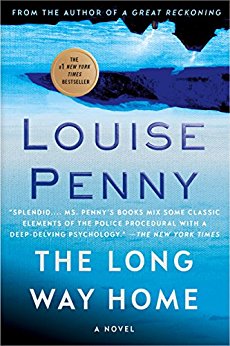
31) 4/14: The Long Way Home (Chief Inspector Gamache series, #10) by Louise Penny
Gamache is taking in a long-needed rest, spending long stretches at home with his wife for the first time in many years after having retired from his post. His friend Clara is worried about her husband's absence and finds the courage to open up to Gamache.
This ended on what felt like a necessary conclusion, even if it's disappointing and devastating in a way.
32) 4/18: The Nature of the Beast (Chief Inspector Gamache series, #11) by Louise Penny
A boy disappears and in investigating his absence, events from the past are dredged up. Long-time residents of Three Pines must wrestle with their inaction and silence as truth comes to light.
One note: I adored Ralph Cosham as a narrator, but he passed away between books ten and eleven. I was a little jolted when I began listening to the gentleman chosen as a replacement, but by the end of the book, while he's different, I could appreciate him as a skilled narrator. It took some adjustment, but in this and later titles, I can admire his skill while also mourning the loss of the artistry that Ralph Cosham brought to the text.
33) 4/20: 84, Charing Cross Road by Helene Hanff
This was a reread for me; I first read the book last summer, courtesy of my sister's copy. This winter I got a hold of the movie, which filled a lovely evening, as much of the dialogue is word for word from the letters. Then I checked out the audiobook when I saw it was available. It's still fresh in my mind (the paperback, movie, and audiobook all happened in about six months), but the audiobook is well done and is performed with multiple readers to cover the various letter writers.
I enjoy epistolary books, but this one is extra delightful given that these are actual letters exchanged. It's a beautiful picture of friendships forming from an initial love of literature. As time goes on, Helene gets involved in their difficulties by sending food parcels to them, and it blossoms from there. It's a short read/listen, well worth encountering.
34) 4/23: A Great Reckoning (Chief Inspector Gamache series, #12) by Louise Penny
Gamache had retired from the Surete, but after some time off, accepted a position at the Surete Academy, training new cadets. There was rot in the Surete, which led to the events of Gamache's departure, and he suspects the academy had individuals that had an agenda to create loyalists instead of cadets who will become officers that seek the greater good.
Gamache fires some faculty and hires others, one of which is a gamble, given his history. Gamache even selects the incoming cadet class, and one particular student he takes under his wing. Amelia Choquet doesn't seem as if she will finish and she's rough around the edges, but Gamache knows her back story and chose her in an attempt to stop the cycle of hopelessness and grief.
When a professor is killed, Gamache finds himself investigating again, and a copy of a map leads him and some students back to Three Pines to investigate.
35) 4/26: A Prayer for Owen Meany by John Irving
When friends share their top reads of all time, this book comes up just often enough as a favorite book. I bought a Kindle copy on sale several months ago, but as my reading time fluctuates, I also ended up buying it on Audible when it was discounted. I steadily listened to it, and for much of the book, I was entertained but was waiting for the moment I'd understand why people loved it so.
It's not a short read/listen; the audiobook clicks in at nearly 27 hours (although about 30 minutes of that is a conversation with the author). There's a lot of buildup, but the final hour or two are riveting. Irving admitted in the concluding interview that he started with a premise of what would it take for an atheist to believe in a higher power, and he wrote that story. The Vietnam War feels like a character, although we are hearing about it years in the future. It's a tribute to friendship and to family.
Small sidenote: when I was younger, I saw the movie Simon Birch, which is loosely based on this book (I can recall the circumstances of watching it -- at the annual cabin campout through our 4H club -- but the movie was forgettable). I decided to watch it again after concluding the book, but I was highly disappointed in the alterations they made, even as I understood why. The book's closing is so powerful that it's hard to settle for the diluted retelling.
36) 4/30: Glass Houses (Chief Inspector Gamache series, #13) by Louise Penny
This title, although the 13th in the series, still manages to engage readers by new methods. The structure of this one begins with a trial, where Gamache is testifying. We try to piece together details, and some chapters go back in time so we can live out the events Gamache is referring to.
A mysterious masked and hooded figure appears in Three Pines, standing ominously in the square, refusing to speak or leave. When the figure is later found murdered, the investigation is muddled and we switch between the trial and the events leading up to the discovery of the body and the time afterwards to see what could have been changed.
Louise Penny is not afraid to try new formats for her Gamache books, which is one reason I keep coming back. I heard an interview with her where she admitted that she doesn't want to get bored writing formulaic mysteries, so she keeps playing around until she finds something that captures her interest. This isn't a favorite of mine, but it was still an enjoyable listen
The included Amazon links are affiliate links; should you be inclined to purchase one, these links only mean Amazon will give me a small percentage of the cost, at no additional expense to you.
25) 4/1: Inspired: Slaying Giants, Walking on Water, and Loving the Bible Again by Rachel Held Evans
I've shared before how pivotal Rachel Held Evans' book A Year of Biblical Womanhood was for me (I took a tangent when discussing the book The Little Way of Ruthie Leming, seen here). Because I pre-ordered her newest book Inspired, I had the opportunity to also be sent an Advanced Readers Copy of it so I could read it a couple months before it was released. In it, Evans comes back to the Scripture with new eyes, reminding herself why she was drawn to it in the first place, and she falls in love with it again.
In some ways, the format reminds me of How to Read the Bible for All Its Worth; both recognize the Bible is written in various styles, and just as you wouldn't approach a book of poetry the same way you'd approach a history text, so you shouldn't read the Psalms the same you'd read the prophets and so on, but Inspired has a less clinical feel.
Rachel Held Evans has a small vignette before each chapter to bring light to the upcoming section. Perhaps it's a short story, a play, a poem, even a choose-your-own adventure piece.
Some chapters, like her section "Resistance Stories," feel especially relevant and timely. In the "War Stories" chapter, Rachel Held Evans reminds us it is good to wrestle with passages we can't make sense of, like widespread slaughter of people groups in the Old Testament:
"Brene Brown warns us we can't selectively numb our emotions, and no doubt this applies to the emotions we have about our faith. If the slaughter of Canaanite children elicits only a shrug, then why not the slaughter of Pequots? Of Syrians? Of Jews? If we train ourselves not to ask hard questions about the Bible, and to emotionally distance ourselves from any potential conflicts or doubts, then where will we find the courage to challenge interpretations that justify injustice? How will we know when we've got it wrong?" (pages 68-69)I appreciated this book, following RHE's journey and watching her create and learn, finding herself retreating back into the Bible and being reminded of what she loves about it.
26) 4/2: Bread and Wine: A Love Letter to Life Around the Table with Recipes by Shauna Niequist
This was my first title that I've read of Niequist, although I have several friends that enjoy her. This book is a testimony of the power of food and of gathering around a table.
Each chapter offers a recipe (I listened to the audiobook, read by Shauna, and in those cases, there is a link to download the recipes instead of having to copy them down). Some recipes are more complex than others, and I enjoyed how she shared the role each of the meals played in her life. Moments of joy and grief are naturally covered. After all, I think of when my brother and first child died, how we were gifted meals upon meals, a welcome relief when we could barely form thoughts together, let alone cook a nourishing meal. And I think of when we welcomed two other daughters home, and in those joyful, sleep-deprived times, we were blessed with meals yet again. Food connects us, and this book discusses how that is a sacred thing.
27) 4/5: The Gulag Archipelago by Aleksandr Solzhenitsyn
This book was a labor of love. The first time I ever went on a plane was to travel to Russia when I was in high school, and I've been drawn to literature from that country ever since. I first picked this up about a decade ago and read the first 200 pages or so, but it was around the time we moved from Minnesota to Indiana, and sometime during that transition, I set it aside. I've been longing to get back to it, so when someone in my book club asked if there was a subset of people who would read it with her, two of us jumped at the chance. Once a date was set to discuss it, I set up a reading plan to ensure I finished.
These 600-plus pages make up only the first of three volumes. This copy is found just often enough at used book sales, but I've never come across the other books in the wild, new or used. My husband was kind enough to locate them online and gifted them to me, so I'm hoping to work through those volumes in the next year or so. A word of warning: one member of the book club switched to an abridged edition when it became clear she couldn't finish in time. However, as the discussion went on, she realized she got the overall picture but missed the specific stories that brought life to it and helped the other two of us appreciate it. So if you're intrigued, pick up the unabridged book(s), not the abridged copy.
Solzhenitsyn has compiled comprehensive information to inform us about how Russians were arrested and imprisoned with no cause in the years 1918-1956. The torture they endured, the interrogations, the monotony of daily life once they arrived in a cell -- much is covered in this volume. Solzhenitsyn wrote this in secret, and I'm in awe of his capacity to remember details, names, circumstances.
His insights are powerful; one section compares and contrasts Germany and Russia after World War II. Germany publicly prosecuted 86,000 war criminals, whereas Russia only put 10 on trial (given their populations, that number should have been closer to 250,000). Solzhenitsyn suggests that, when Russians hesitated to draw all of that evil into the light, wanting to ignore it and let sleeping dogs lie, they were teaching their youth that evil is not punished and, instead, is financially lucrative. Whereas Germany publicly condemned their sins, vowing to learn from them ("Not to put them on trial so much as their crimes", page 177). I mentioned this on a couple different occasions with a friend who grew up in Berlin, and she confirms that, when they discuss history, there is absolutely no sugarcoating Hitler's actions.
"We have to condemn publicly the very idea that some people have the right to repress others. In keeping silent about evil, in burying it so deep within us that no sign of it appears on the surface, we are implanting it, and it will rise up a thousandfold in the future. When we neighter punish nor reproach evildoers, we are not simply protecting their trivial old age, we are thereby ripping the foundations of justice from beneath new generations. It is for this reason, and not because of the "weakness of indoctrinational work," that they are growing up "indifferent." Young people are acquiring the conviction that foul deeds are never punished on earth, that they always bring prosperity.
It is going to be uncomfortable, horrible, to live in such a country!" pages (177-178)
His book is heavy and hard to read at times because of the subject matter, but he does have a sarcastic style that comes through that could bring a smile to my face in the darkest passages. And I found myself drawn to such beautiful, poignant insights:
"The sixteen-hour days in our cell were short on outward events, but they were so interesting that I, for example, now find a mere sixteen minutes' wait for a trolley bus much more boring. There were no events worthy of attention, and yet by evening I would sigh because once more there had not been enough time, once more the day had flown. The events were trivial, but for the first time in my life I learned to look at them through a magnifying glass." (202)
This is an important read and I'm hoping to start the second volume in the coming weeks. It feels so relevant to read and process and discuss.
28) 4/7: How the Light Gets In (Chief Inspector Gamache series, #9) by Louise Penny
The previous Louise Penny book ends on a heartbreaking note; we saw the inevitable path being laid, but that didn't make it any easier to stomach. In this volume, Gamache wrestles with the new normal of his altered (in)significance at the Surete as he also works on a case for Myrna: the death of her friend. As he delves into her past, he learns she also wrestled with her place in the world and how people viewed her, as she had tried to hide from her childhood of notoriety. Meanwhile, he has several moles in his department and all but one of his previously loyal core team have abandoned him for other departments.
I enjoy all of Louise Penny's novels, but this is tied as a favorite; I've learned I have a special place for the volumes where she has intricately woven several storylines. This one plays out spectacularly. We know Gamache's actions are being analyzed and as several cases converge, the tension heightens as we see what's at stake in the bigger picture.
29) 4/9: In This House of Brede by Rumer Godden
This was a lovely read. The prologue introduces us to Philippa, a powerful, efficient woman in authority. However, she resigns from her post to take orders, and the rest of the novel plays out in the Brede monastery.
I appreciate the portraits we get of the various members -- they are well-rounded instead of being visions of holy, unattainable, perfect nuns. Each is shown with foibles and weaknesses, but we witness them working to love each other through their failings as they struggle to live faithfully in their cloistered home.
There's humor and vulnerability throughout. I loved the truth inherent in the following exchange:
‘Weren’t you surprised that God should have chosen you?’ a young woman reporter, writing a piece on vocations, had asked her. ‘Yes,’ Dame Perpetua had answered, ‘but not nearly as surprised as that He should have chosen some of the others – but then God’s not as fastidious as we are,’ said Dame Perpetua.
30) 4/10: Harry Potter and the Goblet of Fire by JK Rowling
I continue to make my way through the series on audiobook, enjoying Jim Dale's masterful readings. This is the volume with the Tri-wizard Tournament.
I was still a little behind my daughter's progress, but wait until next month when I jump ahead!
31) 4/14: The Long Way Home (Chief Inspector Gamache series, #10) by Louise Penny
Gamache is taking in a long-needed rest, spending long stretches at home with his wife for the first time in many years after having retired from his post. His friend Clara is worried about her husband's absence and finds the courage to open up to Gamache.
This ended on what felt like a necessary conclusion, even if it's disappointing and devastating in a way.
32) 4/18: The Nature of the Beast (Chief Inspector Gamache series, #11) by Louise Penny
A boy disappears and in investigating his absence, events from the past are dredged up. Long-time residents of Three Pines must wrestle with their inaction and silence as truth comes to light.
One note: I adored Ralph Cosham as a narrator, but he passed away between books ten and eleven. I was a little jolted when I began listening to the gentleman chosen as a replacement, but by the end of the book, while he's different, I could appreciate him as a skilled narrator. It took some adjustment, but in this and later titles, I can admire his skill while also mourning the loss of the artistry that Ralph Cosham brought to the text.
33) 4/20: 84, Charing Cross Road by Helene Hanff
This was a reread for me; I first read the book last summer, courtesy of my sister's copy. This winter I got a hold of the movie, which filled a lovely evening, as much of the dialogue is word for word from the letters. Then I checked out the audiobook when I saw it was available. It's still fresh in my mind (the paperback, movie, and audiobook all happened in about six months), but the audiobook is well done and is performed with multiple readers to cover the various letter writers.
I enjoy epistolary books, but this one is extra delightful given that these are actual letters exchanged. It's a beautiful picture of friendships forming from an initial love of literature. As time goes on, Helene gets involved in their difficulties by sending food parcels to them, and it blossoms from there. It's a short read/listen, well worth encountering.
34) 4/23: A Great Reckoning (Chief Inspector Gamache series, #12) by Louise Penny
Gamache had retired from the Surete, but after some time off, accepted a position at the Surete Academy, training new cadets. There was rot in the Surete, which led to the events of Gamache's departure, and he suspects the academy had individuals that had an agenda to create loyalists instead of cadets who will become officers that seek the greater good.
Gamache fires some faculty and hires others, one of which is a gamble, given his history. Gamache even selects the incoming cadet class, and one particular student he takes under his wing. Amelia Choquet doesn't seem as if she will finish and she's rough around the edges, but Gamache knows her back story and chose her in an attempt to stop the cycle of hopelessness and grief.
When a professor is killed, Gamache finds himself investigating again, and a copy of a map leads him and some students back to Three Pines to investigate.
35) 4/26: A Prayer for Owen Meany by John Irving
When friends share their top reads of all time, this book comes up just often enough as a favorite book. I bought a Kindle copy on sale several months ago, but as my reading time fluctuates, I also ended up buying it on Audible when it was discounted. I steadily listened to it, and for much of the book, I was entertained but was waiting for the moment I'd understand why people loved it so.
It's not a short read/listen; the audiobook clicks in at nearly 27 hours (although about 30 minutes of that is a conversation with the author). There's a lot of buildup, but the final hour or two are riveting. Irving admitted in the concluding interview that he started with a premise of what would it take for an atheist to believe in a higher power, and he wrote that story. The Vietnam War feels like a character, although we are hearing about it years in the future. It's a tribute to friendship and to family.
Small sidenote: when I was younger, I saw the movie Simon Birch, which is loosely based on this book (I can recall the circumstances of watching it -- at the annual cabin campout through our 4H club -- but the movie was forgettable). I decided to watch it again after concluding the book, but I was highly disappointed in the alterations they made, even as I understood why. The book's closing is so powerful that it's hard to settle for the diluted retelling.
36) 4/30: Glass Houses (Chief Inspector Gamache series, #13) by Louise Penny
This title, although the 13th in the series, still manages to engage readers by new methods. The structure of this one begins with a trial, where Gamache is testifying. We try to piece together details, and some chapters go back in time so we can live out the events Gamache is referring to.
A mysterious masked and hooded figure appears in Three Pines, standing ominously in the square, refusing to speak or leave. When the figure is later found murdered, the investigation is muddled and we switch between the trial and the events leading up to the discovery of the body and the time afterwards to see what could have been changed.
Louise Penny is not afraid to try new formats for her Gamache books, which is one reason I keep coming back. I heard an interview with her where she admitted that she doesn't want to get bored writing formulaic mysteries, so she keeps playing around until she finds something that captures her interest. This isn't a favorite of mine, but it was still an enjoyable listen
Monday, July 02, 2018
Book Review: The Complete Photo Guide to Hand Lettering and Calligraphy
The Complete Photo Guide to Hand Lettering and Calligraphy is a welcome addition to my library. Over the years I've played around with my own alphabet font, used calligraphy fountain pens, and looked up font suggestions online as I create bullet journal pages. My mother is the source of my creativity, and she once gave me her calligraphy nibs. I had no idea how their uses varied (they've sat in a small tin since I was gifted them due to my inexperience), but this book gave me detailed background information on the merits of each nib and holder type, as well as other modern tools.
The author and the various contributors are thorough in the information given. The sections are beautifully laid out in natural divisions. After detailing tools and paper and expanding on what to notice in the shapes of letters, there are sections on classic and modern calligraphy, decorative lettering, and even digital techniques. The history and recommendations for the best ways to use the script are provided, and I appreciated the detailed and thorough information in each section; for instance, I loved the simplicity and beauty of the cross-drill exercises in the Spencerian Script section.
Included are a variety of projects to inspire readers to be emboldened to create; there are name cards, bookmarks, decorative plates, wall art, and a personal favorite of mine were the embellished notebooks.
I am a fierce advocate for digital books, but I have some exceptions, because of the way I interact with certain genres: children's books, cookbooks, and craft books. This book, while demonstrating a beautiful layout in its digital form, would be so much more useful as a physical book, so I would encourage others to buy it in that medium. There are useful practice pages at the close of the book that, if it were in my possession, I would photocopy so I could practice repeatedly. Additionally, being able to have it open next to me while I practiced would be welcome (and would spare my tablet battery, given the amount of time I'd want to refer to specific alphabet or project suggestions).
This book gives you the resources and confidence to develop calligraphy and hand-lettering skills (I expect soon these fonts will make an appearance in my bullet journal, and I hope to create an original notebook cover with favorite literary quotations).
(I was provided a digital advanced readers copy of this book from NetGalley in exchange for an honest review. I've used Amazon Affiliate links here; should you purchase through these links, I receive a small commission, at no extra cost to you.)
Monday, June 18, 2018
Book Review: First Time Garment Fitting
I have dabbled in sewing; I've made some quilts, even a skirt and a t-shirt. It's a skill I'd love to develop more. One of my not-so-guilty pleasures is watching the popular Project Runway series when I can. I'm in awe watching skilled designers whip up clever, attractive garments on a tight deadline.
One technique I witnessed countless times on that show was how designers would work up a muslin before cutting into their limited, expensive fabric. It was fascinating to me as I watched them conduct fittings, pinning from the outside and altering the garment to fix unflattering issues. But I had never been taught how to do that -- how to learn such skills instead of relying on patterns that don't perfectly fit? After all, some of the appeal of sewing your own garments is getting a better, more flattering fit than you can off a clothes rack.
When I got the chance to review an advance digital copy of First Time Garment Fitting from Netgalley, I was excited to dig in. One of the first things Sarah Veblen does is inform us how to train our eyes to recognize fit issues so we know how to correct them. She has been creating garments for others for 25 years and her expertise shines through these pages. I felt like I was getting to sit in on a master class of techniques. She stresses the importance of sewing muslins, sample garments that will allow you to correct fitting issues so you end up with the ideal pattern pieces from the start, not wasting nice fabrics on shoddy workmanship. Veblen says after she's done some different muslins, she'll sometimes work up the pattern first in a less-expensive fabric for the final fitting. Then, if that works, the client has a new casual garment in their wardrobe, in addition to the final piece.
I especially appreciated her teaching about drag lines, folds, and horizontal balance lines. Veblen encourages designers to use mirrors and photos, both when working on a garment on yourself and on others; those mediums allow you to view a 3D garment in 2D, which can make it easier to identify fit issues. The frequent sketches and photos helped me feel confident I was understanding her thorough, comprehensive steps. They reinforce her teaching, and I liked how she sometimes demonstrated the same pattern on different body types to show how different issues could come to light.
Even her short demonstration on how to transfer pattern markings to muslin by using dressmaker's carbon/transfer paper helped instruct me, as I have some of my mother's sewing supplies but am self taught and didn't know how to use them.
Veblen pulls from her expertise to relay how to compensate for "unbalanced" bodies (for instance, those with scoliosis) so that the garment doesn't draw attention to shoulders being at different heights and so on. There's even instructions for how to scale patterns up or down; for instance, with your final pattern pieces for a blouse, you could size up for a jacket or up a little more for a coat.
This book is a phenomenal resource. The repeated examples of fitting different garments are useful for a beginner like me. I'd love to add this book to my collection and have it near at hand when I'm next working on clothing for myself. It will help me know how and where to add/edit darts, fix drag lines, and establish more skill and confidence in my abilities. The book doesn't supply patterns, but it's so comprehensive with advice and the step-by-step process that it will translate well to patterns you have on hand.
(I was provided a digital advanced readers copy of this book from NetGalley in exchange for an honest review. I've used Amazon Affiliate links here; should you purchase through these links, I receive a small commission, at no extra cost to you.)
Subscribe to:
Posts (Atom)