Showing posts with label Fredrik Backman. Show all posts

Thursday, November 19, 2020

Book Review: Anxious People

Fredrik Backman, the Swedish author that has gained a devoted following worldwide, again delivers with his newest title, Anxious People. Backman is an astute observer of human nature, delving into motivations and fashioning complex characters that one can't help but find connection.

Take an open house, work in a bank robbery, a therapist's office, and an investigation, and see it all play out. As Backman weaved the various storylines together and revealed relationships and connections, at first I felt it was too tidy, that this would be the title of his that fell flat with me. As the story developed, though, the themes of parenthood, failure, and second chances brought me to tears (and I'm a hardened cynic, rarely becoming emotional enough to cry from a text). 

Backman will sometimes switch to a second person point-of-view for asides. That feature can backfire, which is why it's so infrequently used, but Backman employs it to masterfully create intimacy. 

Backman has captivated readers through stories like A Man Called Ove and Beartown, and Anxious People is no exception. I entered with minimal expectations, fearful he wouldn't be able to again captivate me and deliver yet another masterful story, but I need not have doubted. Backman is a gifted storyteller. I can retreat into his words and trust him to craft a story that will stick with me. Backman sees the heartache and the beauty that exist in tandem, in spite of -- or perhaps because of -- each other. And Backman has found a way to capture the realities around us, the power of finding hope and light in the midst of sadness and darkness. 

 (I received a digital ARC from the publisher via NetGalley in exchange for my honest review.)

Wednesday, December 20, 2017

Book Log: November 2017

My youngest sister has been doing an annual post of books completed, and I always enjoy looking through it. I do keep a log of my finished books, so I thought cataloging my completed books at the close of every month would be a good way to dust off this blog and encourage me to jot down a few lines -- or a few paragraphs -- with my impressions (a compiled list will appear at the close of the year). I don't like spoilers, so while I put some initial thoughts after each title, when possible I'm purposely vague regarding plot specifics so as not to dissuade any of you from reading them. This is my second year doing this; here is a page containing the 2016 posts (or here is a list of all 2016 books, without the commentary on each one).

The included Amazon links are affiliate links; many of these titles I check out from the library or already own, but should you be inclined to purchase one, these links only mean Amazon will give me a small percentage of the cost, at no additional expense to you.

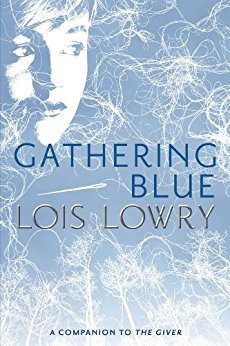
70) 11/1: Gathering Blue by Lois Lowry
Like I mentioned last month, once I learned a fourth book had been published in The Giver series, I wanted to reread the first three before concluding the quartet.

If The Giver shows us a future society where technology is supreme, Gathering Blue reveals when we have minimal development. Kira has a crippled leg, which would typically have condemned a child to be left to die. However, due to her father's sway in the community, her mother is able to save her life.

Kira is gifted at embroidery, so she is given protection and shelter when she is later orphaned. She begins to find fault with the way things are done in their society, how people decide who does or does not have worth, and is wrestling with what her role is to improve her world even as she struggles to make sense of her gift.

71) 11/5: Messenger by Lois Lowry
It's not until Messenger that you truly get to see how the books tie together. I wasn't aware -- until this title -- that the books are all occurring at nearly simultaneous points; previously, I felt that there could be generations between the titles.

You see previous characters immediately come into play. This was poignant to listen to at this time in our political climate, if only because I could draw parallels as I read of a community's desire to close itself off and stop refusing shelter to strangers seeking new, better lives, even as their community began as a place where rejected, imperfect people could start over.


72) 11/8: Son by Lois Lowry
This was substantially longer than the previous three books (it was 400 pages, when the previous titles range from 200-250 pages). It introduces us to Claire, a character that grew up in the same community Jonas from The Giver did. We learn the reason for her escape is the desire to find and be reunited with her a son (not Jonas, as they're nearly the same age).

There is closure to the series, although I admit that it seemed too easy. Without giving anything away, there's a looming danger, but the resolution required some suspension of disbelief from me, although I don't at all regret having read this title.

It made me think of my time student teaching; the school I was in spent some time discussing The Hero's Journey, a framework for understanding many books and movies. The familiar trope of being called to adventure, facing challenges, hitting rock bottom but rising to conquer and return can be a natural lens to view stories. However, the reason it came to mind is that I couldn't naturally figure out who our hero was - the one we spend the most time with isn't present when we see the ultimate "battle," and so if we view it through the lens of the character who is present at that moment, I backtrack and see gaps where I don't feel that they were appropriately developed to be ready to face this moment.

Even with that criticism, though, I enjoyed my time with this series. The Giver was a fascinating book when I first read it, so getting to revisit the titles was nostalgic for me as I remembered where I was in my life when I encountered the different books in the series.

73) 11/19: My Grandmother Asked Me To Tell You She's Sorry by Fredrik Backman
Here was an audiobook listen, picked up after my youngest sister's recommendation. We follow Elsa, a young girl who is especially close to her grandmother but has to learn to live without her. There are messages she has to deliver, which give her insight into the other residents in the building as well as how they were interconnected with her grandmother.

Elsa relished the stories her grandmother told about the Land-of-Almost-Awake, but as she undertakes the mission entrusted to her, we learn those stories may not have been as imaginary as originally believed.


74) 11/26: White Teeth by Zadie Smith
This was the November book club selection. Few of us enjoyed it, but that led to great discussion, as is often the case.

In White Teeth, we meet a series of interconnected individuals who are all trying to assimilate, both literally and figuratively. However, as they go through life, most end up on extremes in their marriages, religion, and so on.

I found I had to push myself to stick with it, but towards the end, the pace picks up and I was more engaged, wondering how the culminating event would transpire.

Wednesday, November 01, 2017

Book Log: October 2017

My youngest sister has been doing an annual post of books completed, and I always enjoy looking through it. I do keep a log of my finished books, so I thought cataloging my completed books at the close of every month would be a good way to dust off this blog and encourage me to jot down a few lines -- or a few paragraphs -- with my impressions (a compiled list will appear at the close of the year). I don't like spoilers, so while I put some initial thoughts after each title, when possible I'm purposely vague regarding plot specifics so as not to dissuade any of you from reading them. This is my second year doing this; here is a page containing the 2016 posts (or here is a list of all 2016 books, without the commentary on each one).

The included Amazon links are affiliate links; many of these titles I check out from the library or already own, but should you be inclined to purchase one, these links only mean Amazon will give me a small percentage of the cost, at no additional expense to you.

59) 10/2: Beartown by Fredrik Backman
First off, I don't think I've discussed Playaway devices yet. I stumbled on them at my library a year or two back and I love them - they're a book loaded onto a simple audio player. Insert battery, attach headphones, and away you go. Perfect for saving my phone battery since it's a standalone device (my normal default is to check out an audiobook via the Overdrive app), and I've even taken to glancing at the children's books in case I find one that will suit my daughter.

Moving on, though, to the book in question (just promise me that you'll glance at the Playaway section next time you're at the library, though - so much nicer than swapping out individual CDs).

Along with many others, I was introduced to Swedish author Fredrik Backman by his book A Man Called Ove (one of last year's reads). Beartown is his most recent book, and while browsing audiobooks one day, I saw they had this in a Playaway edition.

It's a departure from A Man Called Ove. The Beartown community is all about hockey, and we get insights into the junior players, coaches, and families. We wrestle with themes of truth, loyalty, friendship, and success. Individuals learn what they're made of when everything is about to be taken from them.

One character quips, "People round here don't always know the difference between right and wrong. But we know the difference between good and evil."

It's an interesting read, but it tackles some darker topics, and not everyone comes out glowing. There are some redemptive storylines, though, to help balance out the compromised characters.

60) 10/7: Franny and Zooey by J.D. Salinger
This is only the second Salinger I've read, but it came up when there was an online discussion about books you hate, for better or worse. Someone quipped The Catcher in the Rye, and it caused me to chime in with my own evolution surrounding that book (here's the basic story, somehow one of the most popular draws for strangers to my blog -- I think students are hoping there's an essay about it hiding on here they can "borrow").

Anyway, someone suggested I might like Franny and Zooey; in their words, it is seen as a female version of The Catcher in the Rye.

Franny and Zooey is a book of two connected novellas. They are siblings, the youngest in the family. A brother of theirs died years earlier, and there are themes of mourning and faith throughout. Neither story is as edgy as I found The Catcher in the Rye (if you follow my above link, you'll see I was so offended by Holden's mouth and attitude upon first read, only later perceiving how his actions stem from his unprocessed grief over a lost sibling). I struggled with how to pigeonhole Zooey, and his attitude towards his mother in particular was grating, but I found myself marking down several phrases and passages that struck me.

61) 10/11: Dear Enemy by Jean Webster
I had read Jean Webster's Daddy Long-Legs a few years ago, learning about it after I read Dear Mr. Knightley, a modern adaptation of it. Only recently did I learn that there was a sequel to the original work, and as it's in the public domain and a quick read, I picked it up.

It's also in an epistolary style and follows a friend from the first book who is charged with taking over the orphanage and ushering in updates and improvements. It's a pleasant, simple read, but I admit bristling at times as some of the language and beliefs haven't aged well (some of it might have been meant for humorous effect, but the talk of "idiots" that she places elsewhere and her flippant comment about the child of a lyncing victim sobered me up).

62) 10/12: Underground Airlines by Ben H. Winters
This was a recent audiobook listen (a Playaway edition - so convenient!).

The premise of the book is that Lincoln is assassinated before his re-election. A couple states had seceded but were moved by his death that they return to the Union and the Civil War is avoided. Through negotiations, four states continue to have slavery to this day. Our protagonist escaped from slavery when he was younger, but now works for the government tracking down other escaped slaves.

The case he is given at the beginning of the book feels different, and as he investigates we see him relive his past and question his present.

63) 10/13: The Light Between Oceans by M.L. Stedman
This was the selection for last month's Book and a Movie event. I'd hoped to go, but a busy week had me skipping it (I would put forth that creating time for my husband to finish his tenure packet trumps going out to watch a movie that can easily be acquired at any time).

Once I skipped the event, I wasn't sure if I was going to finish, but I was just invested enough to want to know the outcome.

Take a lighthouse keeper and his wife on a remote island. Have her experience repeated pregnancy losses. Then introduce a boat with a dead man and young baby aboard. Consider hiding the shipwreck evidence and claim the child as your own.

Here's the thing: I'm a rule follower. If there's not a good reason to break a rule, I'm not going to. But in this book, this HUGE infraction is made, and although I recognize it as fiction, I found myself tensing up, so frustrated at all that was going to transpire from this one decision. So many things could have been avoided but for that choice. Blame postpartum depression or whatever, but the stubbornness and pain that resulted had me all twisted up. I don't regret reading to the end, but my emotions were manipulated.

64) 10/17: The 100-Year-Old Man Who Climbed Out the Window and Disappeared by Jonas Jonasson
I was talking with a retired friend and he suggested this book was one that stood out to him, a new favorite alongside A Prayer for Owen Meany (yet another book I've begun but have yet to finish).

What a read. It's like an international Forrest Gump storyline, weaving in countless historical individuals as we learn about why a certain centenarian escapes from the nursing home and begins a spontaneous adventure, becoming hunted by the law. His entourage grows, things have a way of working out seamlessly, and we break away regularly to learn of his earlier years (see also: how many historical meetings can happen before it's just too darn ridiculous?).

This book was an amusing read, but I found myself periodically wanting to roll my eyes because of the ongoing orchestrations. It's absurd. Entertaining, but absurd. You're either going to love it or hate it. But if you don't take it seriously, it can be a nice, lighthearted break.

65) 10/21: Henry Huggins by Beverly Cleary
I wasn't familiar with this series, but it was recommended to me as an alternative to the Ramona books (also by Beverly Cleary). In fact, Beezus is a friend of his, with her little sister Ramona tagging along.

Henry is a good boy who just happens to make things complicated and repeatedly finds himself in amusing circumstances. Each chapter is a stand-alone, although they do build on each other. For instance, we learn in the first chapter about how he gets his dog (he eventually finds a way to sneak it onto a bus, although the dog doesn't stay hidden).  Then, in subsequent chapters, his dog is at his side for the adventures.

I listened to this on audiobook and knew immediately my second-grader would love it. Sure enough, as she heard details of Henry's fish expanding in number or the antics of digging up earth worms, she had a huge grin on her face and would giggle.

66) 10/22: Henry and Beezus by Beverly Cleary
There are six books in the Henry Huggins series, and this is the second. It was in the same style as the first, with each chapter a concentrated story. Here we see him try to get out of the main part of the school Christmas play, attempt to acquire a bicycle from a packed auction, and so on.

I don't think I'm going to seek out the further books in the series, only because I'm not the target audience, but if they cross my path as a read-aloud to my daughters, I know I'd enjoy it alongside them.


67) 10/24: Being Mortal: Medicine and What Matters in the End by Atul Gawande
This was the October book club selection and is a phenomenal read. It's the sort of book I find myself reflecting on and wanting to recommend to everyone. If I hadn't been reading a library copy, I would have marked it up and underlined repeatedly.

Atul Gawande describes how end-of-life care has evolved in our country. For instance, he reflects on the development of nursing homes, where safety is paramount and the decisions and structure seem geared towards making the family members feel comfortable with the arrangement without taking into account the desires of the individual who will actually be living there.

However, I felt encouraged by some of the alternatives that were discussed. There are cities and towns where there are support systems to allow people to stay in their homes until the end, with supplemented, affordable handymen, food delivery, and so on. Or take the Eden Alternative, created by Bill Thomas, where he addressed loneliness, helplessness, and boredom. It was fascinating to read how he introduced on-site childcare, animals, and live plants, creating responsibility and interest where there had been nothing before. The gains patients made were astounding. Finally, there were examples of set-ups where individuals had private rooms but shared living/eating quarters with about 10-12 others. They could wake and eat when desired but developed friendships with the others and had nurses who knew them and their desires intimately.

I appreciated how Atul Gawande, a surgeon, used this information, and the experience of losing his father, to change how he interacted with patients, using these four questions (developed by another) as a guide to treatment decisions: "What is your understanding of the situation and its potential outcomes? What are your fears and what are your hopes? What are the trade-offs you are willing to make and not willing to make? And what is the course of action that best serves this understanding?" (page 259).

68) 10/28: The Rosie Project by Graeme Simsion
This was a lighthearted read. Take a narrator who suffers from Asperger's (although he isn't aware of it at the beginning). He lives a very regimented life. For instance, he doesn't want to expend the mental energy to try new food dishes, so he has a set menu of seven dinners that he has memorized so he can dwell on other topics.

Don is a genetics professor and is contemplating marriage. As he's not seeing anyone and doesn't want to waste time by doing a conventional search, he creates a questionnaire that he believes will narrow down the pool to a small number of highly qualified compatible candidates. We witness the results, as well as what happens when he gets to know someone who would fail the questionnaire on multiple levels but becomes a good friend to him as they research The Father Project.

This was just an okay read for me. It paired as a nice alternative to Being Mortal (while that was an exceptional book, sometimes I didn't need to read about dying), but it is just fluffy entertainment with periodic bouts of cringing at the behavior of Don's best friend Gene.

69) 10/30: The Giver by Lois Lowry
I've read this book several times, but I wanted to revisit the series since I heard there was a fourth, and final, book to the quartet. I was unaware of it and wanted to read/listen to them all in order before reading that final one.

I remember much of this book - it's commonly read in schools, and it wasn't until a reread in college that I learned not everyone perceived the ending as I did. In fact, some came to an opposite, darker conclusion.

Take a futuristic society that is highly advanced and controlled, and you have The Giver. Everyone is assigned a job, if you want a spouse or a child, you apply for one and are matched up. Nothing is left to chance, everything is observed and overheard. This society values, if not happiness and love, contentment and placidity and conformity. However, someone must have knowledge of the past, and that is where the name of the book comes in.

This is a great book for discussions. At what price do you want to seek serenity? Is removal from pain a requirement? What do you sacrifice in exchange? It makes me think of my mother, who has struggled for decades with depression. She is very creative and artistic, and her primary complaint about times she has been medicated is that, while it controls her mood swings and levels her out, she loses her creativity. For her, that is an acute loss and she would rarely think the trade-off was worth it.

I was actually surprised at how much longer the ending was than I recalled. I have a vivid recollection of the closing scene, but there was more preceding it from what I originally remembered.

I believe I heard the final book might make the ending of this one less ambiguous, although I don't know that for sure.

Monday, January 02, 2017

Book Log: December 2016

My youngest sister has been doing an annual post of books completed, and I always enjoy looking through it. I do keep a log of my finished books, so I thought cataloging my completed books at the close of every month would be a good way to dust off this blog and encourage me to jot down a few lines -- or a few paragraphs -- with my impressions (a compiled list will appear at the close of the year). I don't like spoilers, so while I put some initial thoughts after each title, when possible I'm purposely vague regarding plot specifics so as not to dissuade any of you from reading them.

The included Amazon links are affiliate links; many of these titles I check out from the library or already own, but should you be inclined to purchase one, these links only mean Amazon will give me a small percentage of the cost, at no additional expense to you.

53) 12/4: A Man Called Ove by Fredrik Backman
This was published in Swedish, then translated into English. In it we meet Ove and discover he is a widower. The chapters build - there's some repetition as information is slowly meted out to reveal what happened to his wife, beginning with their courtship and concluding with her passing.

Ove grew up learning the importance of good character and has become a curmudgeon who likes routine and dislikes human interaction. As a widower, he is lost and struggles to find meaning, believing that his wife was the worthy, loveable one, and he should have been the one to die. The separation from her is too overwhelming that he is considering ways to hasten his death.

Neighbors force him to get involved, often due to their ineptness, and the world is constantly foiling his plans. We see Ove's heart gradually soften.

This was an easy read, although it started slow for me (not necessarily any fault of its own - I kept putting it on the back burner as other things took precedence, and I'm the first to admit books that start gradually can grow into powerful stories; this was certainly true to my experience with Empire Falls, when at first I made myself continue because of a rousing recommendation, and by the end, I hated to pull myself away).

54) 12/8: Don't Want to Miss a Thing by Jill Mansell
This was a palate cleanser between some more thought-provoking books (what a pretentious way to spin chick lit!). Jill Mansell was a British author I'd heard mentioned before, well-known for her women's fiction.

This is a simple story centered around a free-spirited uncle becoming a guardian when his single sister passes away. He removes himself from his old life and retreats to a quiet village. In the village we see relationships begin and play out among a handful of members on a variety of levels (parents and children, spouses, etc).

Will it be receiving accolades and awards right and left? No, but it falls into that beach-read chick-lit if you're just looking for something quick and undemanding.

55) 12/11: The Faith Club: A Muslim, A Christian, a Jew -- Three Women Search for Understanding by Ranya Idilby, Suzanne Oliver, and Priscilla Warner

This was the December book club selection. In short, after 9/11, three women, representing three different faiths, start meeting regularly, first under the guise of writing a children's book detailing the stories their faiths all have in common, and then it evolves into deep friendships with probing conversations and self-examination.

At one point during our discussion someone made the comment that Gilead (last month's read) was more thought-provoking theologically, and this one isn't mind-blowing in its contents, but it does a good job showing how three women with differing beliefs, through regular meetings, find ways to share similarities and differences in their faiths as well as ways to appreciate ways they are similar and different.

I will say that, although I had a library copy, I also ended up checking out the audiobook version since I was running out of time to read due to other responsibilities, and the majority of the book was listened to. I don't recommend the audiobook, since I found myself multitasking and sometimes forgetting which individual was writing at any given time, and it was stilted when there were dictated conversations within the chapters as the reader would announce each name, followed by their line, and they would engage back and forth. I'm not sure there's a smooth way to get around this, but one way could have been to employ three different readers, one for each woman writing the book.

56) 12/25: North and South by Elizabeth Gaskell
You've grown accustomed to how I come at these summaries with tangents. How I first discovered Elizabeth Gaskell is a particularly amusing one to me.

I taught for two years after graduating college. One day during my second year, I found a coupon good for one free Barnes & Noble Classic in my work mailbox. I do love books, but I also love bargains. I dutifully took my coupon to the bookstore and began trying to narrow down my choices. I already owned several yet-unread B&N Classics, so my aim was to select one that I hadn't yet read while also capitalizing on my free title -- the biggest bang for my non-existent buck, if you will. One hefty book I was drawn to was Wives and Daughters by Elizabeth Gaskell. I hadn't read any of her work before, but I was amused by the first paragraph:

To begin with the old rigmarole of childhood. In a country there was a shire, and in that shire there was a town, and in that town there was a house, and in that house there was a room, and in that room there was a bed, and in that bed there lay a little girl; wide awake and longing to get up, but not daring to do so for fear of the unseen power in the next room—a certain Betty, whose slumbers must not be disturbed until six o'clock struck, when she wakened of herself "as sure as clockwork," and left the household very little peace afterwards. It was a June morning, and early as it was, the room was full of sunny warmth and light. 

So purchase it I did.

Now I'm not one to want to know much about a movie or book before beginning it; if it comes recommended by a trusted friend, I will look into it with no background needed. The initial paragraph was enough to charm me, and when I could find time away from teaching responsibilities, I truly enjoyed retreating to read it.

I knew how many pages were in the book, and as I grew invested in the culmination of everything, I found myself staying up exceedingly late one night to finish. I was reading in bed, growing increasingly confused as to how Gaskell would be able to bring closure to everything in the dwindling pages. I finished one of the final chapters, only to turn to the next page to read something to the effect of, "And that was as far as Gaskell got before she died."

WHAT?!?! I wanted to wake up Eric next to me to complain about having read hundreds of pages -- having stayed up late to finish -- only to find NO ENDING.

It was clear that there were only a couple more chapters that were going to be written, and in the last few pages, the editor summarized how Gaskell had told friends she was going to finish it. This does give a measure of closure. However, I was not prepared for the abrupt shift.  Imagine watching a great movie, getting invested in the storyline and characters, only to have a friend turn it off and say, "Aren't you loving it so far? I'm just going to summarize how it ends, okay?" No, not okay. Turn the frickin' movie back on!!

And had I allowed myself to read the back of the book at anytime previous, I would have seen that the summary began with something akin to, "Gaskell's unfinished work Wives and Daughters, ..." This had been published serially, and she passed away before the completion. But I sure didn't expect a volume of this size to be unfinished.

Anyway, in spite of that jarring introduction to Gaskell, I did enjoy her style and I then read North and South shortly afterwards. This revisiting of it was due to the CraftLit podcast.

North and South gets its title from the North and South of England. The primary character has spent much of her life in the idyllic south of England, when circumstances have her relocated with her parents to the industrial north. Margaret is a strong protagonist; Heather Ordover from CraftLit admits she feels like the story could have been called Pride and Prejudice given the personalities at play and the strong opinions held (and, you know, if there hadn't already been a book with that title published a few decades earlier). Slowly Margaret thaws and gains new insight to the worth of her new home of Milton.

For a happily ever after story there's certainly a lot of death, but I still appreciated it.

57) 12/26: Peace, Locomotion by Jacqueline Woodson
I first encountered Jacqueline Woodson through her autobiographical poetry book Brown Girl Dreaming, which received the National Book Award and was a Newbery Honor winner. It was a beautiful collection of poems, and I've been waiting to return to her work. Her poetry book, as well as this one, are geared towards middle grade/young adult readers.

In this book we meet Lonnie Collins Motion, or Locomotion. He and his sister are orphaned and in separate foster home settings. He is writing this series of letters to his sister, to act as the "rememberer" and put stories of his parents on paper so that they're not forgotten; through the letters, we see him process his grief and become confident in his writing skills (there's minimal poetry in this book, but we read often about how he thinks of himself as a poet; only now as I added the Amazon links did I learn that this book is actually a sequel to Locomotion, a book told through Lonnie's poems).

This book sees Locomotion come to peace with where he and his sister are situated (both of them are in good homes, even as they miss each other). There's also some talk of PTSD when Lonnie interacts with someone who has returned home after losing a leg due to an IED.

58) 12/31: Between the World and Me by Ta-Nehisi Coates
I feel an obligation to read works that portray worlds and realities different than my own, be they different in time, location, time, or circumstance. This may look like reading books by authors who herald from other countries (Jhumpa Lahiri, Khaled Hosseini, or Gabriel Garcia Marquez are three I've enjoyed). This might look like reading classics like Les Miserables or something by Charles Dickens. And this might look like reading books from people whose experiences in America are so different from my own (Just Mercy and Evicted are two powerful ones that I read this year that fall in this category; Hillbilly Elegy is on my 2017 reading list).

This is a book that falls in that last category.

The author recently published a piece called "My President Was Black" in The Atlantic.

Ta-Nehisi Coates, a black man, writes Between the World and Me as a letter to his son. In it, he discusses what it has been like to be a black man living in America, as well as his experiences when he has been abroad, and also ways in which his life is already noticeably different than his son's life. There's an undercurrent of anger and frustration (well, I guess it's pretty blatant) about ways in which his life has been lessened because of how he has to be constantly aware of how he is perceived, how he has been taught to carry himself one way on the street to not seem to be an easy target, carry himself another way not to seem a threat to whites. He describes how the streets and schools both fail black people. And he reflects on the death of a black man he went to college with who was trailed and then shot and killed by police when he was mistaken for someone else.

This is an important read. I found myself marking up my Kindle copy with large passages I wanted to reflect further on. I mentioned above that there's this feeling of anger and even helplessness, but I feel that he finds some encouragement for his son as he concludes.

If you read this and you are white, you need to be prepared to absorb his anger without getting offended - this is his heartfelt account of what his life has been like as a black man.  You may not agree with it all, but you have to understand this is his experience. I know when I feel threatened, fight or flight tendencies creep in, but it's important to read this as it is without trying to return fire or disregard it. That anyone has these experiences should break us all.