Showing posts with label Louise Penny. Show all posts

Monday, August 10, 2020

Book Review: All the Devils Are Here

Some authors settle into a formulaic rhythm in a book series. The overall arc is identical, but the specific details are altered for each successive contribution. There can be a draw to that -- a comfortable expectation -- but it gives an author an easy way out from having to stretch themselves or their characters into innovative scenarios or altered structures. This predictability is not the case for the Inspector Gamache series, where new settings and challenges abound. I can trust Louise Penny to take me on a journey filled with nuanced characters and a thoughtful story.

In All the Devils Are Here, we find Gamache and his wife in Paris, awaiting the birth of a grandchild. His grown children now both live in Paris with their respective families. Through the lens of Gamache's relationship with his godfather, we are introduced to questions of who we are and how our past influences our present. The professional lives of his son and son-in-law come into play and intersect as they investigate the attempted murder of a loved one and how their employers may have had a hand in events.

We can trust Gamache to act nobly and navigate events thoughtfully, and his connections with friends and family are soothing to read. Penny has created a character we would all value as a trusted, valuable friend. He is not without fault, but that humanity, coming from a place of seeking truth, makes him feel all the more real and unusual.

I look forward to each release in the series. It is clear that Penny's strengths are characterization and plot devices. I don't often find myself captivated by a specific line artfully written, but I am drawn into the overall story and invested in how it plays out.

I tend to be critical of narrators, as I admit when I'm listening to audiobooks, I'm often multitasking, so I need a highly effective reader to captivate me. However, Louise Penny titles are expertly narrated. The first ten were done so effectively by Ralph Cosham, and upon his passing, Robert Bathurst continues the tradition of top-rate narration. This series is one that I will pre-order the audiobook in advance, and they never disappoint.

(I received a digital ALC from the publisher via NetGalley in exchange for my honest review.)      

Sunday, July 15, 2018

Book Log: April 2018

My youngest sister has been doing an annual post of books completed, and I always enjoy looking through it. I do keep a log of my finished books, so I thought cataloging my completed books at the close of every month would be a good way to dust off this blog and encourage me to jot down a few lines -- or a few paragraphs -- with my impressions (a compiled list will appear at the close of the year). I don't like spoilers, so while I put some initial thoughts after each title, when possible I'm purposely vague regarding plot specifics so as not to dissuade any of you from reading them. This is my third year doing this (here is a list of my 2017 books, and here is the list of my 2016 books; these pages don't have commentary, but if there's a title that interests you, click on the appropriate month to learn more).

The included Amazon links are affiliate links; should you be inclined to purchase one, these links only mean Amazon will give me a small percentage of the cost, at no additional expense to you.

25) 4/1: Inspired: Slaying Giants, Walking on Water, and Loving the Bible Again by Rachel Held Evans
I've shared before how pivotal Rachel Held Evans' book A Year of Biblical Womanhood was for me (I took a tangent when discussing the book The Little Way of Ruthie Leming, seen here). Because I pre-ordered her newest book Inspired, I had the opportunity to also be sent an Advanced Readers Copy of it so I could read it a couple months before it was released. In it, Evans comes back to the Scripture with new eyes, reminding herself why she was drawn to it in the first place, and she falls in love with it again.

In some ways, the format reminds me of How to Read the Bible for All Its Worth; both recognize the Bible is written in various styles, and just as you wouldn't approach a book of poetry the same way you'd approach a history text, so you shouldn't read the Psalms the same you'd read the prophets and so on, but Inspired has a less clinical feel.

Rachel Held Evans has a small vignette before each chapter to bring light to the upcoming section. Perhaps it's a short story, a play, a poem, even a choose-your-own adventure piece.

Some chapters, like her section "Resistance Stories," feel especially relevant and timely. In the "War Stories" chapter, Rachel Held Evans reminds us it is good to wrestle with passages we can't make sense of, like widespread slaughter of people groups in the Old Testament:
"Brene Brown warns us we can't selectively numb our emotions, and no doubt this applies to the emotions we have about our faith. If the slaughter of Canaanite children elicits only a shrug, then why not the slaughter of Pequots? Of Syrians? Of Jews? If we train ourselves not to ask hard questions about the Bible, and to emotionally distance ourselves from any potential conflicts or doubts, then where will we find the courage to challenge interpretations that justify injustice? How will we know when we've got it wrong?" (pages 68-69)
I appreciated this book, following RHE's journey and watching her create and learn, finding herself retreating back into the Bible and being reminded of what she loves about it.

26) 4/2:  Bread and Wine: A Love Letter to Life Around the Table with Recipes by Shauna Niequist
This was my first title that I've read of Niequist, although I have several friends that enjoy her. This book is a testimony of the power of food and of gathering around a table.

Each chapter offers a recipe (I listened to the audiobook, read by Shauna, and in those cases, there is a link to download the recipes instead of having to copy them down). Some recipes are more complex than others, and I enjoyed how she shared the role each of the meals played in her life. Moments of joy and grief are naturally covered. After all, I think of when my brother and first child died, how we were gifted meals upon meals, a welcome relief when we could barely form thoughts together, let alone cook a nourishing meal. And I think of when we welcomed two other daughters home, and in those joyful, sleep-deprived times, we were blessed with meals yet again. Food connects us, and this book discusses how that is a sacred thing.

27) 4/5: The Gulag Archipelago by Aleksandr Solzhenitsyn
This book was a labor of love. The first time I ever went on a plane was to travel to Russia when I was in high school, and I've been drawn to literature from that country ever since. I first picked this up about a decade ago and read the first 200 pages or so, but it was around the time we moved from Minnesota to Indiana, and sometime during that transition, I set it aside. I've been longing to get back to it, so when someone in my book club asked if there was a subset of people who would read it with her, two of us jumped at the chance. Once a date was set to discuss it, I set up a reading plan to ensure I finished.

These 600-plus pages make up only the first of three volumes. This copy is found just often enough at used book sales, but I've never come across the other books in the wild, new or used. My husband was kind enough to locate them online and gifted them to me, so I'm hoping to work through those volumes in the next year or so. A word of warning: one member of the book club switched to an abridged edition when it became clear she couldn't finish in time. However, as the discussion went on, she realized she got the overall picture but missed the specific stories that brought life to it and helped the other two of us appreciate it. So if you're intrigued, pick up the unabridged book(s), not the abridged copy.

Solzhenitsyn has compiled comprehensive information to inform us about how Russians were arrested and imprisoned with no cause in the years 1918-1956. The torture they endured, the interrogations, the monotony of daily life once they arrived in a cell -- much is covered in this volume. Solzhenitsyn wrote this in secret, and I'm in awe of his capacity to remember details, names, circumstances.

His insights are powerful; one section compares and contrasts Germany and Russia after World War II. Germany publicly prosecuted 86,000 war criminals, whereas Russia only put 10 on trial (given their populations, that number should have been closer to 250,000). Solzhenitsyn suggests that, when Russians hesitated to draw all of that evil into the light, wanting to ignore it and let sleeping dogs lie, they were teaching their youth that evil is not punished and, instead, is financially lucrative. Whereas Germany publicly condemned their sins, vowing to learn from them ("Not to put them on trial so much as their crimes", page 177). I mentioned this on a couple different occasions with a friend who grew up in Berlin, and she confirms that, when they discuss history, there is absolutely no sugarcoating Hitler's actions.
"We have to condemn publicly the very idea that some people have the right to repress others. In keeping silent about evil, in burying it so deep within us that no sign of it appears on the surface, we are implanting it, and it will rise up a thousandfold in the future. When we neighter punish nor reproach evildoers, we are not simply protecting their trivial old age, we are thereby ripping the foundations of justice from beneath new generations. It is for this reason, and not because of the "weakness of indoctrinational work," that they are growing up "indifferent." Young people are acquiring the conviction that foul deeds are never punished on earth, that they always bring prosperity.
 It is going to be uncomfortable, horrible, to live in such a country!" pages (177-178)

His book is heavy and hard to read at times because of the subject matter, but he does have a sarcastic style that comes through that could bring a smile to my face in the darkest passages. And I found myself drawn to such beautiful, poignant insights:
"The sixteen-hour days in our cell were short on outward events, but they were so interesting that I, for example, now find a mere sixteen minutes' wait for a trolley bus much more boring. There were no events worthy of attention, and yet by evening I would sigh because once more there had not been enough time, once more the day had flown. The events were trivial, but for the first time in my life I learned to look at them through a magnifying glass." (202)

This is an important read and I'm hoping to start the second volume in the coming weeks. It feels so relevant to read and process and discuss.

28) 4/7: How the Light Gets In (Chief Inspector Gamache series, #9) by Louise Penny
The previous Louise Penny book ends on a heartbreaking note; we saw the inevitable path being laid, but that didn't make it any easier to stomach. In this volume, Gamache wrestles with the new normal of his altered (in)significance at the Surete as he also works on a case for Myrna: the death of her friend. As he delves into her past, he learns she also wrestled with her place in the world and how people viewed her, as she had tried to hide from her childhood of notoriety. Meanwhile, he has several moles in his department and all but one of his previously loyal core team have abandoned him for other departments.

I enjoy all of Louise Penny's novels, but this is tied as a favorite; I've learned I have a special place for the volumes where she has intricately woven several storylines. This one plays out spectacularly. We know Gamache's actions are being analyzed and as several cases converge, the tension heightens as we see what's at stake in the bigger picture.

29) 4/9: In This House of Brede by Rumer Godden
This was a lovely read. The prologue introduces us to Philippa, a powerful, efficient woman in authority. However, she resigns from her post to take orders, and the rest of the novel plays out in the Brede monastery.

I appreciate the portraits we get of the various members -- they are well-rounded instead of being visions of holy, unattainable, perfect nuns. Each is shown with foibles and weaknesses, but we witness them working to love each other through their failings as they struggle to live faithfully in their cloistered home.

There's humor and vulnerability throughout. I loved the truth inherent in the following exchange:
‘Weren’t you surprised that God should have chosen you?’ a young woman reporter, writing a piece on vocations, had asked her. ‘Yes,’ Dame Perpetua had answered, ‘but not nearly as surprised as that He should have chosen some of the others – but then God’s not as fastidious as we are,’ said Dame Perpetua.
I'm still processing the ending, trying to decide how I feel about the events, but overall it was a pleasant, thoughtful read and a loving tribute to a monastery the author had occasion to get to know.

30) 4/10: Harry Potter and the Goblet of Fire by JK Rowling
I continue to make my way through the series on audiobook, enjoying Jim Dale's masterful readings. This is the volume with the Tri-wizard Tournament.

I was still a little behind my daughter's progress, but wait until next month when I jump ahead!


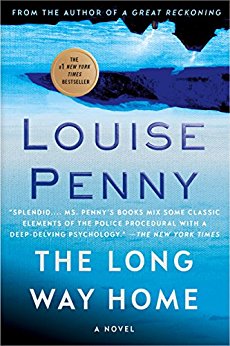
31) 4/14: The Long Way Home (Chief Inspector Gamache series, #10) by Louise Penny
Gamache is taking in a long-needed rest, spending long stretches at home with his wife for the first time in many years after having retired from his post. His friend Clara is worried about her husband's absence and finds the courage to open up to Gamache.

This ended on what felt like a necessary conclusion, even if it's disappointing and devastating in a way.


32) 4/18: The Nature of the Beast (Chief Inspector Gamache series, #11) by Louise Penny
A boy disappears and in investigating his absence, events from the past are dredged up. Long-time residents of Three Pines must wrestle with their inaction and silence as truth comes to light.

One note: I adored Ralph Cosham as a narrator, but he passed away between books ten and eleven. I was a little jolted when I began listening to the gentleman chosen as a replacement, but by the end of the book, while he's different, I could appreciate him as a skilled narrator. It took some adjustment, but in this and later titles, I can admire his skill while also mourning the loss of the artistry that Ralph Cosham brought to the text.


33) 4/20: 84, Charing Cross Road by Helene Hanff
This was a reread for me; I first read the book last summer, courtesy of my sister's copy. This winter I got a hold of the movie, which filled a lovely evening, as much of the dialogue is word for word from the letters. Then I checked out the audiobook when I saw it was available. It's still fresh in my mind (the paperback, movie, and audiobook all happened in about six months), but the audiobook is well done and is performed with multiple readers to cover the various letter writers.

I enjoy epistolary books, but this one is extra delightful given that these are actual letters exchanged. It's a beautiful picture of friendships forming from an initial love of literature. As time goes on, Helene gets involved in their difficulties by sending food parcels to them, and it blossoms from there. It's a short read/listen, well worth encountering.

34) 4/23: A Great Reckoning (Chief Inspector Gamache series, #12) by Louise Penny
Gamache had retired from the Surete, but after some time off, accepted a position at the Surete Academy, training new cadets. There was rot in the Surete, which led to the events of Gamache's departure, and he suspects the academy had individuals that had an agenda to create loyalists instead of cadets who will become officers that seek the greater good.

Gamache fires some faculty and hires others, one of which is a gamble, given his history. Gamache even selects the incoming cadet class, and one particular student he takes under his wing. Amelia Choquet doesn't seem as if she will finish and she's rough around the edges, but Gamache knows her back story and chose her in an attempt to stop the cycle of hopelessness and grief.

When a professor is killed, Gamache finds himself investigating again, and a copy of a map leads him and some students back to Three Pines to investigate.

35) 4/26: A Prayer for Owen Meany by John Irving
When friends share their top reads of all time, this book comes up just often enough as a favorite book. I bought a Kindle copy on sale several months ago, but as my reading time fluctuates, I also ended up buying it on Audible when it was discounted. I steadily listened to it, and for much of the book, I was entertained but was waiting for the moment I'd understand why people loved it so.

It's not a short read/listen; the audiobook clicks in at nearly 27 hours (although about 30 minutes of that is a conversation with the author). There's a lot of buildup, but the final hour or two are riveting. Irving admitted in the concluding interview that he started with a premise of what would it take for an atheist to believe in a higher power, and he wrote that story. The Vietnam War feels like a character, although we are hearing about it years in the future. It's a tribute to friendship and to family.

Small sidenote: when I was younger, I saw the movie Simon Birch, which is loosely based on this book (I can recall the circumstances of watching it -- at the annual cabin campout through our 4H club -- but the movie was forgettable). I decided to watch it again after concluding the book, but I was highly disappointed in the alterations they made, even as I understood why. The book's closing is so powerful that it's hard to settle for the diluted retelling.

36) 4/30: Glass Houses (Chief Inspector Gamache series, #13) by Louise Penny
This title, although the 13th in the series, still manages to engage readers by new methods. The structure of this one begins with a trial, where Gamache is testifying. We try to piece together details, and some chapters go back in time so we can live out the events Gamache is referring to.

A mysterious masked and hooded figure appears in Three Pines, standing ominously in the square, refusing to speak or leave. When the figure is later found murdered, the investigation is muddled and we switch between the trial and the events leading up to the discovery of the body and the time afterwards to see what could have been changed.

Louise Penny is not afraid to try new formats for her Gamache books, which is one reason I keep coming back. I heard an interview with her where she admitted that she doesn't want to get bored writing formulaic mysteries, so she keeps playing around until she finds something that captures her interest. This isn't a favorite of mine, but it was still an enjoyable listen

Tuesday, April 24, 2018

Book Log: March 2018

My youngest sister has been doing an annual post of books completed, and I always enjoy looking through it. I do keep a log of my finished books, so I thought cataloging my completed books at the close of every month would be a good way to dust off this blog and encourage me to jot down a few lines -- or a few paragraphs -- with my impressions (a compiled list will appear at the close of the year). I don't like spoilers, so while I put some initial thoughts after each title, when possible I'm purposely vague regarding plot specifics so as not to dissuade any of you from reading them. This is my third year doing this (here is a list of my 2017 books, and here is the list of my 2016 books; these pages don't have commentary, but if there's a title that interests you, click on the appropriate month to learn more).

The included Amazon links are affiliate links; should you be inclined to purchase one, these links only mean Amazon will give me a small percentage of the cost, at no additional expense to you.

17) 3/1: Outrun the Moon by Stacey Lee
This was a Young Adult title. The setting is San Francisco in 1906. Mercy Wong lives in Chinatown but longs for educational opportunities not afforded to her as a girl and as a minority, so she cleverly concocts a way to gain admission to an elite private girls school. Mercy struggles with the transition, as a majority of the other students, all white, don't accept her.

A major historical event took place in 1906 San Francisco, and while most summaries mention it, I'll try to keep to my spoiler-free reflections in case you're the sort to want to pick up a book with little context beforehand. The girls are forced to find a way to work together, in spite of initial impressions. I could see this book having a place in a middle-school classroom for some interdisciplinary English and History unit.

18) 3/3: Bury Your Dead (Chief Inspector Gamache series, #6) by Louise Penny
I'm making quick work of the Chief Inspector Gamache series. Other than the first title, which had a long library wait, I've been able to get a hold of most of the series with minimal waits, and the audiobooks are such a treat that when I have a choice between actual book or audio, I select the latter.

This title I read instead of listened to, and I found myself completely engaged. Reading these titles back to back could backfire if the stories were too formulaic, but just when you thought you had things figured out, this book changes all that.

Throughout this book, three different story arcs are happening. Immediately we get a brief glimpse of something monumental that happened "off stage," and as the characters wrestle with the consequences of that, we are granted more and more details of what that event was until we get the full picture at the close of the book. Gamache is taking some time for himself but happens into a case, which is a second storyline (and that case has fingerprints that delve deep into the past, to the founding of Quebec). The third storyline is happening in Three Pines, as Jean Guy is sent there to re-investigate a previous case.

As I was reading, I had to put my book down at one point to rave to my husband about how much I was enjoying the clever storylines and how this title was my new favorite, even though my husband has read zero of these books and my words were probably vague and confusing. I just needed someone to gush to, and he was in the room. And lest we think these characters are tropes and don't transform, we see several instances of people altering their behaviors due to circumstances around them.

19) 3/4: The Lone Ranger and Tonto Fistfight in Heaven by Sherman Alexie
Here's the thing: I was first introduced to Sherman Alexie last year; some of his titles were familiar to me, but once I heard him speak I read his memoir when it was released and have been working through some of his other books.

As I was reading this short-story collection, though, I heard murmurings that he might be caught up in the #metoo movement for abusing his influence in the industry in an attempt to pressure women into uncomfortable encounters when they'd originally believed his interest in their work genuine and professional. NPR did a story when Alexie's accusers came forward.

I'm not yet ready to separate those accounts from Alexie's work, so I finished this book with little enjoyment just to move on. So there's my non-review review.

20) 3/8: I Thought It Was Just Me (but it wasn't): Telling the Truth About Perfectionism, Inadequacy, and Power by Brene Brown
I only have one other Brene Brown title under my belt, but I picked this one up when the Audible title was deeply discounted.

It's been awhile since I've taken a tangent before tying it into my impression of a book, so let's meander, shall we? When I was in middle school, perhaps, I remember a drive with my dad. He was working through audiotapes for Men Are From Mars, Women are From Venus. I believe the author was setting up the framework of men and women using the same words but their meaning behind them is nuanced and different and their motivations for sharing information is different as well (I think that's basically the premise of the whole book, but I suspect we were near the beginning). Dad paused it to get my impression. I remember it was something like, "Well of course men and women communicate differently, Dad!" He was flabbergasted that I'd already known something that he was just realizing.

Anyway, back to Brene Brown's I Thought It Was Just Me. I appreciate the truths she articulated, like the differences between shame and low self-esteem, the importance of cultivating compassion, and expressing empathy over sympathy (especially towards ourselves before we can practice it outward). She also puts forward some "case studies" and for later sections she offers questions to work through, using the earlier case studies as a guide to demonstrate the personal reflections that could result.

So how does this tie in to my earlier story? I really appreciate her insights, but for the most part it wasn't an a-ha book for me, since I feel like I've come to these same conclusions. I do recommend this book, though, especially if you could use a practical way to reflect on any shame you feel regarding any area of your life (she has examples from people who struggle with parenthood, family dynamics, marriage tension, body image, employment, and so on).

21) 3/12: A Trick of the Light (Chief Inspector Gamache series, #7) by Louise Penny
Another Louise Penny mystery, big surprise, right? Here we find Clara has achieved success in the art community, but the death of someone from her past puts a damper on the celebrations.

This was, as always, a pleasure to listen to, but on the heels of Bury Your Dead, it was hard to compete. We continue to see characters evolve and deepen, though.


22) 3/12: Adam: God's Beloved by Henri Nouwen
Adam: God's Beloved was a beautiful read. I've been longing to read some Henri Nouwen after repeatedly encountering excerpts of his and I found this title at the college library.

This is the final book he wrote before passing away and it describes his experiences at L'Arche Daybreak Community. He served as their chaplain and was paired with Adam, one of the residents there; Henri was expected to wake up Adam and get him ready for the day. Adam was severely handicapped and couldn't speak, and Henri was intimidated with the responsibility in the beginning, but he credits Adam with transforming his faith. He sees Adam as a parallel to the biblical Adam.

Nouwen's insights were thoughtful and heartfelt:
"Could Adam pray? Did he know who God is and what the Name of Jesus means? Did he understand the mystery of God among us? For a long time I thought about these questions. For a long time I was curious about how much of what I knew, Adam could know, and how much of what I understood, Adam could understand. But now I see that these were for me questions from 'below,' questions that reflected more my anxiety and uncertainty than God's love. God's questions, the questions from 'above' were, 'Can you let Adam lead you into prayer? Can you believe that I am in deep communion with Adam and that his life is a prayer? Can you let Adam be a living prayer at your table? Can you see my face in the face of Adam?'" (page 55)
I found myself wanting to mark down passage after passage, no small feat for a short book. Adam transformed Nouwen's life and the lives of several people he encountered, even if only for a meal, that it's easy to see why Nouwen held him in such esteem.

At one point Nouwen mentions being disappointed in a peer who accused him of throwing his life away and doing such demeaning work that he wasn't trained for when he should be preaching and writing in ways that would have more impact. That would be an easy reaction to have, but Nouwen allowed himself to get past any self-importance and see Adam for who he was and what he could reveal about our true vocations. In their exchanges, even as Adam wasn't verbal, Nouwen humbled himself and opened himself up to learn from Adam, to the point that when Adam died, Nouwen has this to say:
"I couldn't stop gazing at his face. I thought, 'Here is the man who more than anyone connected me with my inner self, my community, and my God. Here is the man I was asked to care for, but who took me into his life and into his heart in such an incredibly deep way. Yes, I had cared for him during my first year at Daybreak and had come to love him so much, but he has been such an invaluable gift to me. Here is my counselor, my teacher, and my guide, who could never say a word to me but taught me more than any book, professor, or spiritual director.'" (page 101)

23) 3/20: Priestdaddy by Patricia Lockwood
Priestdaddy was our March book club selection. Time was tight for me, so I opted to listen to the audiobook during a long drive to and from Iowa.

This was mixed for me. Lockwood's father had been a married Lutheran minister before converting to Catholicism. He received a special dispensation from the Pope to become a priest. That in itself is interesting, but while the title is Priestdaddy, the book is really about her and her parents are peripheral. Early on she and her husband move back in with her parents, which brings old memories to light. Unfortunately, I felt like she was always trying to make us laugh and the characters seemed like caricatures instead of fully formed individuals.

Lockwood is a poet, so towards the end as she wasn't trying as hard to be funny and delved into more serious, introspective areas, I found my enjoyment increase.  As often happens when I have a middling opinion of a book club selection, though, hearing others' enjoyment and insight does challenge me to revisit certain passages and realize I do appreciate them, even if the overall impression isn't very positive.

24) 3/27: The Beautiful Mystery (Chief Inspector Gamache series, #8) by Louise Penny
I continue my progress in this mystery series. I believe this book is the first that hasn't had a Three Pines component. There is a death at a remote monastery that is being investigated.

One aspect I haven't mentioned yet that I appreciate is that, while these cases often have Inspector Gamache away from his wife for long stretches during investigations, they are dedicated to each other and there's no question of his loyalty. He will process cases with her because he appreciates her perspective, and they have a deep love and affection for each other that isn't dimmed when they're apart. We see how other relationships are similar and different to theirs, and what that suggests about their ultimate success or failure.

Tuesday, March 06, 2018

Book Log: February 2018

My youngest sister has been doing an annual post of books completed, and I always enjoy looking through it. I do keep a log of my finished books, so I thought cataloging my completed books at the close of every month would be a good way to dust off this blog and encourage me to jot down a few lines -- or a few paragraphs -- with my impressions (a compiled list will appear at the close of the year). I don't like spoilers, so while I put some initial thoughts after each title, when possible I'm purposely vague regarding plot specifics so as not to dissuade any of you from reading them. This is my third year doing this (here is a list of my 2017 books, and here is the list of my 2016 books; these pages don't have commentary, but if there's a title that interests you, click on the appropriate month to learn more).

The included Amazon links are affiliate links; should you be inclined to purchase one, these links only mean Amazon will give me a small percentage of the cost, at no additional expense to you.

10) 2/6: A Rule Against Murder (Chief Inspector Gamache series, #4) by Louise Penny
You better just get used to me mentioning these mysteries on a regular basis as I work through them this year. The mysteries are such a treat to read, filled with descriptions of enticing food and led by a detective that reminds me peripherally of Hercule Poirot but more human and less self-absorbed as he assembles a team that individually aren't seen as spectacular but they tend to submit to his mentorship and they work together impressively.

In this fourth book in the series, we find Gamache and his wife celebrating their anniversary, as they do every year, at a secluded, posh resort. They happen to be present while the lodgings are taken over for a family reunion. Gamache notices how dysfunctional all the family members seem to be. We shouldn't be surprised that someone Gamache knows from nearby Three Pines is related to this family and shows up shortly before a murder happens.

As Gamache investigates, it comes to light that many of the family members perceived events growing up in a false light, reading things into them that weren't there. It's a bittersweet story, with some hints of redemption but not all comes to rights.

11) 2/10: Harry Potter and the Prisoner of Azkaban by J.K. Rowling
I'm continuing to revisit this series, steadily working through the delightful Jim Dale audiobooks. They continue to be excellent (and I'm still behind my daughter and my husband, so I'm in this perpetual state of forgetting which event happens in which book because I will overhear a chapter being read aloud or will take over reading duties once or twice a week and it can get all jumbled in my mind).


12) 2/13: The Brutal Telling (Chief Inspector Gamache series, #5) by Louise Penny
Here we go again -- another Louise Penny mystery! In this one, a hermit is found murdered in Three Pines, seemingly unknown by everyone.

This story doesn't wrap up as cleanly as other books in the series -- there's evidence that appears to pinpoint a character as the murderer, but it's not as definitive as previous books, as if they're saving room for a return to the story.


13) 2/19: I Am Malala: The Girl Who Stood Up for Education and Was Shot by the Taliban by Malala Yousafzai
This has been on my radar for awhile, and while I've been steadily plugging along on it, reading chapters in stolen moments, I made quicker progress when I switched to listening to the book.

I thought I knew the general storyline: Malala gets shot by the Taliban because of her desire to continue to be educated, even as they are discouraging girls from attending schools. I thought this book would start with that event and continue with her healing and activism afterwards. However, I was surprised and suitably impressed by how outspoken and involved Malala was at a young age. This book sets out how life changed for her family as the Taliban gained power, and how her family was resisting and Malala was getting the word out on her daily experiences. She was targeted because of these actions, but the shooting event happens towards the end of the book.

14) 2/20: The Scarlet Pimpernel by Baroness Orczy
When I was in junior high, my English teacher, the quirky Mr Pierce, introduced this book to our class. He read most of it aloud to us as we followed along, pausing to define new vocabulary or confirming we were following the plot. Then he set us lose to read the last third or so on our own. I DEVOURED it -- it's such a fun read. It's a classic but it doesn't read like some other books in the canon that, while interesting, discourage some people because of the length and the frequent, detailed asides.

In The Scarlet Pimpernel, we find ourselves in France and England during the Reign of Terror. We learn there is a master of disguise who is smuggling royalty destined to guillotine out of the country. There's a parallel love story alongside the Pimpernel action, where Lady Marguerite is reflecting on how she has lost the love and respect of her new husband, the simpering but previously devoted man.

I picked up an audiobook copy from Audible when it was recently on sale, and it was a delightful listen. In fact, the narrator was Ralph Cosham, the same narrator of the Chief Inspector Gamache books I've been working through. It became further amusing to notice there is a character named Armand in both this title and the Louise Penny series.

15) 2/20: Love Big, Be Well: Letters to a Small-Town Church by Winn Collier
This is a newly released book, not all that long but packed full of thoughtful reflections. The structure is a series of letters, primarily from a pastor to his church. The way he was hired was a deviation from traditional practices, primarily because the search committee was getting disillusioned with the process.

I found myself enjoying the structure. First, the letters aren't all that long, and while they do refer to earlier letters, they can be stand-alones, making it easy to read a letter or two at a time, then set it down. I wanted to copy down so much of the insights (but, for now, I snapped photos of multiple pages so I could return the book and come back later to copy down my favorite passages). It's a beautiful book.

16) 2/23: Seize the Day by Saul Bellow
Here was the February book club selection; we'd originally earmarked a longer work of his, but it was quickly replaced with this novella until the book club got a taste for Saul Bellow's writing style to see if we wanted to tackle one of his longer classic works.

The protagonist is a gentleman entering middle age but still floundering in the world. He spent several years attempting (and failing) to become famous in Hollywood, and now he's nursing his wounds after leaving his wife and children and struggling to find meaning. He finds it easy to lay blame on others, but in more vulnerable, introspective moments, he recognizes ways in which he habitually chooses the wrong course. He is desperate to gain approval from his father, longing for the slightest signs of love and caring. The discussion was delightful and already makes me want to revisit the book after the insights shared.

Saturday, February 17, 2018

Book Log: January 2018

My youngest sister has been doing an annual post of books completed, and I always enjoy looking through it. I do keep a log of my finished books, so I thought cataloging my completed books at the close of every month would be a good way to dust off this blog and encourage me to jot down a few lines -- or a few paragraphs -- with my impressions (a compiled list will appear at the close of the year). I don't like spoilers, so while I put some initial thoughts after each title, when possible I'm purposely vague regarding plot specifics so as not to dissuade any of you from reading them. This is my third year doing this (here is a list of my 2017 books, and here is the list of my 2016 books; these pages don't have commentary, but if there's a title that interests you, click on the appropriate month to learn more).

The included Amazon links are affiliate links; should you be inclined to purchase one, these links only mean Amazon will give me a small percentage of the cost, at no additional expense to you.

1) 1/1: Christmas Bells by Jennifer Chiaverini
This was our December book club selection, but as we couldn't find a time that worked for everyone to meet until the new year, I took my time reading it so the details would be fresh.

This book has an interesting structure. The chapters alternate points-of-view, with half of them being in the past, focused on Henry Wadsworth Longfellow, and the other half set in present-day Cambridge with various individuals whose lives and stories intersect. The centerpiece is Longfellow's poem "Christmas Bells," which many of us know because it became the song, "I Heard the Bells on Christmas Day."

In the Longfellow chapters, we learn about his life before, during, and after the Civil War; in the present-day sections, a church choir is the focus, with us getting to learn more about the director, the accompanist, the priest, members of the choir, patrons of the church, and so on. Most of the present-day is focused on a single day, although each character does end up revealing experiences from their past.

The author did her research on Longfellow and I found I knew little of his life before picking up this book. It was an easy, sweet read if you're looking for something light.

2) 1/1: Tell Me Three Things by Julie Buxbaum
This was a light YA read. Take a girl who is still processing her mother's death and her loving father who remarries and moves her away from everything familiar. Have her start at a new (private, fancy) high school.

Jessie receives an email from a fellow student wanting to answer any questions and help her adjust, but preferring to stay anonymous in the process. We fluctuate between seeing their online conversations and her daily life. It's a pleasant, easy read with some predictable outcomes -- I think anyone could guess from the early pages who her correspondent is, but much like movies like You've Got Mail or books like Dear Mr Knightley, some of the fun is knowing something that the protagonist doesn't.

There's a sense of real, believable grief in some of the exchanges, so I wasn't at all surprised to learn the author also lost her mother as a child and used some of that experience to shape Jessie's processing of the grief. It's not a heavy, deep read, though, and there's a frankness with drugs, drinking, even sex that could turn off those that don't want that in a book or want to be aware so they can delay offering this to a younger teen.

3) 1/6: The Absolutely True Diary of a Part-Time Indian by Sherman Alexie
As you may remember, I encountered Sherman Alexie at UntitledTown last year, and after hearing him speak, I first read his memoir You Don't Have to Say You Love Me (it was one of my favorite reads last year).

Then I picked up this book and was struck at how much true-to-life it seemed, given what I knew of Alexie's experiences growing up. I was not at all surprised to learn in the afterword that he was going to include this in a memoir but it didn't seem to fit. When he was approached to write a Young Adult book, he (slightly) adapted this. One addition was working with a graphic artist to create little doodles, drawings, and comics throughout, which fit well.

Sherman Alexie has earned a special place with me -- I connected with his memoir and I find myself wanting to work through his titles (I have one or two of his poetry books I've acquired at thrift stores, so we'll see when those rise to the top of the reading pile).

4) 1/6: A Fatal Grace by Louise Penny
I do love a good mystery - they're nostalgic for me, harkening back to the many Sherlock Holmes and Agatha Christie titles I devoured growing up, as well as the car trips when Grandpa Claire would play audiobooks of their mysteries and I would be riveted. I appreciate Louise Penny's books, giving me new material to work through.

This is the second in the Inspector Gamache series. In it, we revisit Three Pines, the idyllic village, when during an annual curling match an unlovable woman is killed.

I can see myself revisiting this series again, after working my way through (there are thirteen published so far). Penny does a believable job in casting suspicion on any number of people that you don't know until the big reveal who is the guilty one. It would be fun to pay more attention to the plot once you know who the perpetrator is and see better what bread crumbs we received.

5) 1/14: The Austen Escape by Katherine Reay
A couple years ago I'd read and enjoyed Dear Mr Knightley by Katherine Reay, and as people enjoy her books, I pick them up now and again. I didn't really appreciate A Portrait of Emily Price from last year, but this was a new release I spotted at the library and spontaneously checked out.

Take two friends from childhood who have grown a little distant but decide to take a retreat to an Austen experience. The protagonist ends up living through her own Austen novel (love triangle, misunderstandings), even if she doesn't realize it.


6) 1/15: Half-Broke Horses by Jeannette Walls
My boss in Indiana recommended The Glass Castle to me about a decade ago; it's a riveting book that sometimes hit too close to home (although Walls' family was far more dysfunctional than mine ever was or will be). The Glass Castle is the story of the author's childhood with a father who was always dreaming up the next get-rich-quick scheme (then having to run out of town when they backfired) and a dreamy, artistic mother who wasn't prepared to handle the responsibility of parenthood. I found myself gasping at some of her experiences (the moving-truck scene was heart-palpitating, for starters).

Anyway, that story was memorable enough and Half-Broke Horses was released later as the story of the author's maternal grandmother. By the end, you can see how certain personality traits of Walls' mother were already firmly entrenched in childhood. And there is no doubt that Walls' grandmother had grit.

7) 1/20: The Cruelest Month by Louise Penny
This was the third book in the Inspector Gamache series, and my first audiobook listen in the series (a new favorite way to encounter them). In this series, a death happens during a seance.

Another dynamic of this book is that Inspector Gamache's a past case of Gamache's is coming back to light -- we hear more specifics of the Arnot case (previously mentioned in brief, vague snippets) and how Gamache's just actions didn't sit well with everyone involved. So in addition to investigating the Three Pines murder, Gamache also must navigate leading his team when he understands not all are loyal to him.


8) 1/27: The Unlikely Pilgrimage of Harold Fry by Rachel Joyce
Here was the January book club selection (look at us, meeting twice in one month!). As we were going to have short turnaround from our last meeting, we picked this book from our list given how quick it can be to read.

Harold Fry is retired, driving his wife a little batty with his constant, uninspired presence. There's a distance between them; although we get snippets that reveal they used to be very close and loving, we recognize something more than time has come between them.

Harold learns a former co-worker of his is in hospice and writes a letter. When he goes to post it, though, he just keeps walking. Although he lives in the south of England and she is in the north, he decides he's going to hand-deliver it to her. He is ill-prepared in shoes, clothing, and provisions, but he feels he can't stop. He crosses paths with varied personalities and learns he should stop making assumptions about others based on their age, how they dress, and so on. Some of my favorite passages were him reflecting on the universal experiences we all face, how we all have stories to share and burdens to carry.

Harold spends a lot of the time walking thinking back over his life, reflecting on moments he hasn't thought about in decades. I think all of us can recall times we had similar experiences - time alone outside, perhaps, with no distractions, allowing your mind to wander and pull up old memories and experiences.

His wife, while confused and resentful, fearing she has lost her husband to this ill woman, goes through her own transformation.

I couldn't help but remember the title Absent in the Spring (written by Agatha Christie under the pseudonym Mary Westmacott). In that book, we also have a protagonist with unexpected time on her hands, and with her forced isolation, she ends up spending a lot of time thinking about her past and gaining new insight about herself and those around her and is faced with a choice to make when she returns home.

9) 1/30: The Refugees by Viet Thanh Nguyen
This was a short-story collection, with each chapter focusing on the Vietnamese refugee experience. I first learned of this author after his book The Sympathizer won the Pulitzer Prize for Fiction in 2016. While I haven't yet read it, when this came across my radar I grabbed it.

It was okay. I generally am drawn to both books of short stories and stories of the immigrant/refugee experience, but this fell a little flat. I'm not sure if it's because I encountered it as an audiobook (those tend to have to work harder to earn my love), but I wasn't invested enough in the characters. I still plan on picking up The Sympathizer sometime, though.

Tuesday, January 23, 2018

Book Log: December 2017

My youngest sister has been doing an annual post of books completed, and I always enjoy looking through it. I do keep a log of my finished books, so I thought cataloging my completed books at the close of every month would be a good way to dust off this blog and encourage me to jot down a few lines -- or a few paragraphs -- with my impressions (a compiled list will appear at the close of the year). I don't like spoilers, so while I put some initial thoughts after each title, when possible I'm purposely vague regarding plot specifics so as not to dissuade any of you from reading them. This is my second year doing this; here is a page containing the 2016 posts (or here is a list of all 2016 books, without the commentary on each one).

The included Amazon links are affiliate links; many of these titles I check out from the library or already own, but should you be inclined to purchase one, these links only mean Amazon will give me a small percentage of the cost, at no additional expense to you.


75) 12/16: Hannah Coulter by Wendell Berry
Wendell Berry first came to my attention when my youngest sister talked about reading The Art of the Commonplace, a selection of his essays. Since then, I've heard him crop up in conversation, both for his nonfiction and fiction works.

This book was one that was often recommended, and my library had an audiobook version of it.

As the book opens, Hannah Coulter is an elderly woman reflecting on her life: how she came to be married, what she learned from raising children, and what it was like to care for the land. The land itself feels like a character at times.

Something about it, maybe the pacing, made me think of Marilynne Robinson's writing -- measured and thoughtful and beautiful.

76) 12/16: The Lord and His Prayer by NT Wright
This was my first read of an NT Wright book, and my husband and I read and discussed it at regular intervals with some other couples. It's a relatively short read, breaking up the Lord's Prayer in small chunks and reflecting in depth about the meaning. I enjoyed the insights, and the Daily Bread chapter especially resonated with me.


77) 12/16: Dark Matter by Blake Crouch
I've heard this mentioned as a fun read, and it didn't disappoint. It plays with the concept of every time you make a decision, there's another world where you make a different choice, meaning there are thousands and thousands of branches playing out every possibility. I can see its appeal as we watch the protagonist end up in another world.

My one quibble is that when I've heard interviews with the author, it's made clear immediately what the premise is, although the book takes a while to play it out. It reminded me of the time I saw a preview for Mr & Mrs Smith, where we learn they are both assassins, although they have kept that information from their spouse. However, the movie doesn't expect you to know those details, so it takes forever for them to reveal that to the audience. This book felt similarly - if you knew any of the premise, you're just drumming your fingers, waiting for the character to make the same realization. It does pick up after that point, though, and there's some high-adrenaline moments.

78) 12/22: Love Does: Discover a Secretly Incredible Life in an Ordinary World by Bob Goff
A good friend brought this title to my attention as one of her favorites. I acquired a copy and while I was reading it, I also noticed Bob Goff and his wife were going to be in the area for an event. This friend and I ended up going to hear them speak, and while I'd intended to finish this before I saw him, that wasn't to be.

Bob Goff is a character. He is gregarious and quirky and amusing. This book is set up as a collection of short reflections about what love does. We learn a lot about his life, and some of it sounds so absurd. But as he expounds on how he feels we need to find the whimsy in life -- how God is whimsical and would wish us to follow suit -- you can't help but grin.

I realized that I wasn't unfamiliar with Bob Goff -- I quickly placed him as the individual Donald Miller meets in A Million Miles in a Thousand Years (which I read last year) and Don makes repeat appearances in this book.

It's an easy book to pick up and read in spurts since the sections are short and relatively self-contained. I can see the attraction of it and find myself thinking of some of the circumstances in the book (helping his children contact all the world leaders, then getting to visit a number of them; holding court at Disney; becoming Honorary Consul for Uganda; including his personal phone number in the book to be approachable for anyone who felt the need to call, and on and on).

79) 12/25: Still Life by Louise Penny
I've heard this author and series mentioned for years; I believe my first encounter was via the NPR: Books podcast when we lived in Indiana. I distinctly remember sitting at my sewing table working on some project while listening, thinking I should pick up the first in the series.

Still Life is the first in her Inspector Gamache series. I grew up on a steady diet of Agatha Christie and Sherlock Holmes, devouring all that I could of their works. As I read this, I understood the attraction. We get to know the individuals in Three Pines, a quaint Canadian town where a death happens. Inspector Gamache and his team come in to investigate, find the woman's death wasn't accidental, and work to find the culprit.

The characterization is strong - I remember thinking Penny was going to great lengths to convey all the characters convincingly, far more than expected when I thought we wouldn't see these individuals again (non-spoiler: I'm playing catch up with my book log, and at the time of writing this, I've actually read two more of her books, also based in Three Pines).

I'm not unbiased, given my early love of mysteries, but I really enjoyed this book. In fact, I was actually sick late Christmas Eve into Christmas Day. When I couldn't sleep (which was basically the whole night), I found myself reading this on my Kindle, and even having it connected with my miserable illness didn't dull my impression of it.

80) 12/25: The Greatest Gift: Unwrapping the Full Love Story of Christmas by Ann Voskamp
This was an advent devotional I followed more or less successfully (sometimes there was some catch-up to do, but these readings aren't that long so it was possible). It's framed with a short passage of the Bible (there's even a link to print off Jesse Tree ornaments to follow, her reflections on it as well as a short quotation from an another author, and several questions to encourage reflection, discussion, and action.

Ann Voskamp writes in a style that's a blend of narrative and poetry - I find myself having to concentrate more and not rush so I can take it in. I appreciated the quotations she gathered from others, and some of her reflections stuck with me. Is it one I will return to again? I don't know that I will, but I appreciated walking through Advent with these readings and I'm eyeing her newest children's Advent release of short daily readings, which includes a pop-up tree that holds ornaments, one for each day; I imagine my children will connect with that.

81) 12/26: Dear Martin by Nic Stone
This is a Young Adult lit book where we meet a high schooler who is wrestling with being a person of color in our current setting. He admires Martin Luther King, Jr., and begins writing letters to him in a way of trying to process what he's seeing in the world around him and figure out whether a life of non-violence is even feasible.

I really wanted to like this book, but the premise is stronger than the execution. It could be that it's because I couldn't help but compare it to The Hate U Give, a book I read earlier in the year; they try to do similar things, but I found The Hate U Give to be much more powerful and successful at it.


82) 12/27: The Importance of Being Earnest by Oscar Wilde
Let's start with a tangent. Way back in 2005 I had an Audible account, long before they were acquired by Amazon. It was perfect as I commuted to and from work, 45 minutes each way. I was an English teacher at the time, and periodically I would re-listen to what we would be covering in class that week as I drove so my prep time could be spent drawing up the questions and exercises.

Sometimes free or heavily discounted titles would be offered, so I ended the year with quite an extensive library, not all of which I was able to listen to. However, I had used an email address for that account that I no longer had access to, and since I couldn't remember my password, there was no way to log in and I couldn't reset it without access to the email account. This has been hanging over my head as something I really wanted to figure out, and I'd periodically contact Audible to see if I could resolve it, getting one step closer each time. FINALLY I got connected with Jessica, my favorite Audible employee of all time. Over a couple different phone calls, I was able to track down the necessary details to prove I was the holder of that defunct account, and Amazing Jessica then merged those titles with my current account.

This was one of those titles that I was re-connected with (I'd listened to it ages ago, but it had been a different performance). I loaded it onto my phone in anticipation of our holiday driving. It's a short but entertaining listen about false identities originally created to allow an out for tedious social commitments. When confusion arises that might result in the loss of love, there's brief tension that ends up concluding pleasantly.